
BLOG
How Long Does a Background Check Take? What You Should Expect

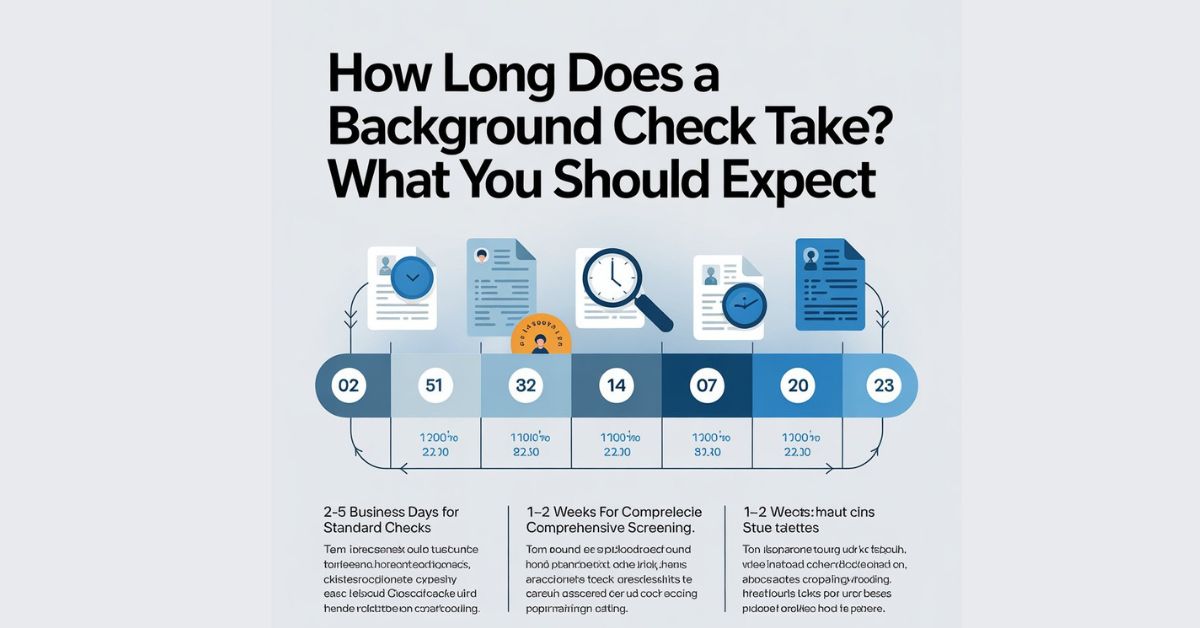
When you apply for a new job, rent an apartment, or even start a volunteer position, chances are you’ll face one crucial hurdle: the background check. It’s that behind-the-scenes process that can feel like both a necessary step and a black box. You might be left wondering: how long does a background check take? The timeline can vary significantly based on several factors, leaving many applicants anxious as they await results.
Understanding what goes into these checks and their timelines is essential. Whether you’re eager to jump into your next opportunity or just curious about the process, this guide will help demystify background checks and set your mind at ease. Let’s explore the ins and outs of this vital screening step together!
Understanding Background Checks
Background checks are essential tools that employers, landlords, and organizations use to verify an individual’s history. These checks can encompass various aspects of a person’s life, including criminal records, employment history, and credit reports.
The primary goal is to ensure safety and trustworthiness in potential hires or tenants. By conducting these screenings, decision-makers aim to minimize risk and protect their interests.
Individuals often find background checks daunting due to the information they reveal. However, understanding what they entail makes it less intimidating.
A thorough check gathers data from public records and databases while adhering to legal guidelines for privacy. Each type of background check may focus on different areas depending on the context—such as jobs involving sensitive information versus roles requiring minimal scrutiny.
Navigating this process requires awareness of how comprehensive these investigations can be.
The Different Types of Background Checks
Background checks come in various forms, each serving distinct purposes. One common type is the criminal background check. This assesses an individual’s criminal history at local, state, and federal levels.
Another type is the employment verification check. It confirms past job titles, durations of employment, and reasons for leaving previous positions.
Educational background checks are also prevalent. These verify degrees or certifications claimed by a candidate.
Credit history checks delve into an individual’s financial responsibility. They’re often used in roles that involve handling money or sensitive information.
Personal reference checks provide insights from former colleagues or supervisors about a candidate’s work ethic and character.
Understanding these types helps candidates prepare better for what lies ahead during their application process.
Factors That Affect the Timeframe for a Background Check
Several factors can influence how long a background check takes. One of the primary elements is the type of check being conducted. For instance, criminal history checks might be quicker than employment verifications.
The depth of the investigation also matters. A comprehensive review that includes multiple states or countries will naturally take longer than a local search.
Another important consideration is the responsiveness of third-party agencies involved in gathering your information. If they are slow to reply, it could extend the process significantly.
Additionally, any discrepancies found during verification may cause delays as employers seek clarification or further documentation from you.
Seasonal demand for background checks can impact processing times. High-volume hiring periods often lead to longer wait times due to increased requests on service providers.
Average Processing Times for Different Types of Background Checks
Average processing times for background checks can vary significantly based on the type of check being conducted. For employment screenings, expect anywhere from one day to several weeks. This range largely depends on the depth of the search and whether it includes criminal history, education verification, or prior employment.
For tenant screening, results often come back in just a few days. Landlords typically want quick information but may rely more heavily on databases that streamline the process.
If you’re looking at international background checks, be prepared for longer wait times. These can take several weeks due to legal requirements and varying data access across countries.
Specialized checks like those for financial services or positions involving sensitive information might also push timelines beyond two weeks as they require meticulous review processes. Each case is unique and influenced by specific factors related to the applicant’s history.
What to Expect During the Background Check Process
When undergoing a background check, expect to provide personal information. This includes your full name, address history, and Social Security number.
You might also be asked about your employment history and education. Be prepared for the possibility of verification calls to past employers or schools.
The process can feel intrusive but remember that it’s standard practice for many companies. They want to ensure they’re making informed hiring decisions.
Once submitted, the background check could take anywhere from a few hours to several days based on various factors like depth and type of check requested.
During this time, you may not receive immediate updates. Patience is key as thorough checks often require coordination with multiple agencies or databases.
If there are any discrepancies found in your records, you’ll likely be contacted for clarification before moving forward in the hiring process.
Tips for Speeding Up the Background Check Process
To speed up the background check process, first ensure that your paperwork is complete. Double-check all forms for accuracy. Missing information can lead to delays.
Next, provide any necessary identification promptly. Sometimes checks require verification of identity or additional documents. Having these ready can save time.
Stay in touch with the hiring company or screening agency. Regular communication helps you stay updated on the status and address any issues quickly.
Consider using digital platforms when possible. Online submissions are often processed faster than traditional mail.
Be proactive about notifying references ahead of time. This keeps them engaged and prepared to respond without delay, further streamlining the process toward a quicker resolution.
Conclusion
Navigating the background check process can feel daunting, especially when you’re eager to start a new job or rental agreement. By understanding how long a background check takes and what factors influence that timeframe, you can better prepare yourself for the journey ahead. Each type of background check varies widely in processing time, from simple checks that might take just a day to thorough investigations requiring weeks.
Being proactive is key. Gather necessary documents early, respond quickly to requests for information, and choose reputable companies known for efficiency. This approach not only helps speed up your application but also minimizes uncertainty during what can be an anxious waiting period.
Staying informed about each step of the process ensures you’re ready for whatever comes next—whether it’s signing that employment contract or moving into your new home. With patience and preparation on your side, you’ll navigate this crucial step with confidence.


A work injury can place an Arizona firm at the intersection of two distinct matters: a workers’ compensation claim and a potential civil claim against an outside person or business. For firms that do not handle both areas, a dependable process for referring a work injury case in Arizona can help protect the client’s options while keeping the referral relationship clear, timely, and professional.
This issue arises across Arizona’s economy, from Phoenix-area delivery collisions and warehouse incidents to construction-site injuries in rapidly growing communities. A referral should not wait for every fact to be resolved. The better approach is to identify possible third-party involvement early, preserve what can disappear, and connect the client with counsel equipped to evaluate the civil case alongside the industrial claim.
Why a Work Injury Can Create Two Legal Paths
Workers’ compensation generally addresses whether an injury arose out of and in the course of employment. A third-party case asks a different question: whether someone outside the employer and coworker relationship caused or contributed to the harm. Arizona law allows an employee entitled to compensation to pursue a remedy against a negligent or wrongful person “not in the same employ,” which is the starting point for a third-party analysis.
For example, a technician struck by another company’s vehicle while traveling between service calls may have an industrial claim and a claim against the at-fault driver. A laborer injured by machinery supplied or maintained by an outside company may present product, maintenance, or site-control questions. The facts, contracts, insurance policies, and available evidence often matter as much as the initial incident report.
A Practical Intake Screen for Arizona Firms
Referral opportunities are frequently visible in the first client conversation. Rather than asking only whether the injury happened at work, use questions designed to reveal every entity connected to the incident:
- Where did the injury occur, and who owned or controlled the location?
- Was a vehicle, delivery service, contractor, subcontractor, vendor, or property manager involved?
- Who owned, supplied, repaired, or maintained the equipment involved?
- Did police, fire personnel, OSHA, or another agency prepare a report?
- Are there photographs, surveillance cameras, dash cameras, work orders, text messages, or witnesses?
- Has the client received correspondence from another insurer or business?
Do not assume that the employer’s internal investigation identifies every responsible party. On multi-employer construction sites, in particular, jobsite control and contractual responsibility may be divided among several businesses. A referral lawyer can investigate those relationships without requiring the workers’ compensation firm to take on a separate civil practice area.
Comparing the Two Matters Without Oversimplifying Them
Workers’ Compensation Claim
The industrial claim commonly focuses on the employment connection, medical treatment, work restrictions, and benefits. It is not necessarily a determination that another party acted negligently. Arizona’s workers’ compensation system also generally limits claims against an employer or coworker acting within the scope of employment, subject to statutory exceptions and case-specific facts.
Third-Party Civil Claim
The civil matter may require proof that an outside party owed a duty and caused legally recoverable harm. Depending on the facts, the claim may concern a motor-vehicle collision, unsafe premises, negligent maintenance, defective equipment, or another theory of liability. A third-party case can involve damages and losses that are evaluated differently from workers’ compensation benefits.
Timing, Notice, and the Need for an Early Referral
Delay can change the leverage and structure of a third-party matter. Under Arizona’s third-party workers’ compensation statute, an employee who pursues a third-party action must provide written notice to the carrier or self-insured employer of the intent to bring it and provide timely, periodic notice about pleadings and rulings. The statute also contains an assignment provision when the employee or dependents do not institute an action within one year after the cause of action accrues.
That statutory one-year provision should not be treated as the only timing question. Civil limitation periods, public-entity notice rules, insurance conditions, and evidence-preservation needs may point to a much earlier referral. For many injury claims, Arizona’s general limitation statute provides a two-year period, but the proper deadline depends on the claim and parties involved. The statutory limitations framework is a useful starting point, not a substitute for case-specific analysis.
Build a Referral Package That Moves the Case Forward
A concise, organized referral package is more useful than a large collection of unfiltered documents. With the client’s authorization and appropriate confidentiality safeguards, include:
- A short chronology of the accident, treatment, work status, and claim activity.
- The employer, carrier, claim number, adjuster information, and any accepted-condition notices.
- Incident reports, police reports, witness names, photographs, videos, and correspondence.
- Information identifying vehicles, contractors, property owners, equipment suppliers, and insurers.
- Known lien notices, benefit-payment information, and settlement communications.
- Any urgent dates, scheduled hearings, or pending release documents.
State plainly what is known, what is uncertain, and what the client needs most immediately. This permits receiving counsel to assess viability quickly while avoiding unsupported assumptions about fault, damages, or coverage.
Preserve Evidence Before It Is Altered or Lost
Arizona workplaces move quickly. A delivery vehicle may be repaired, a loading dock camera may overwrite footage, and defective equipment may be returned to service or discarded. Firms should encourage preservation of photographs, work orders, inspection records, electronic communications, location data, and the physical item involved when practical. A prompt preservation request may be appropriate where a business controls material evidence, but it does not replace timely action to protect a claim.
Coordinate Around Liens and Settlement Decisions
A third-party recovery can affect the workers’ compensation carrier’s interests. Arizona law gives the carrier or other party liable for compensation a lien on the amount actually collectible from the third party to the extent of benefits paid, subject to the statute’s calculation rules. The gross settlement figure is therefore not the same as the client’s net recovery.
Before a client signs a release, the handling teams should confirm the scope of the release, outstanding medical bills, lien figures, future treatment needs, and whether a proposed compromise requires carrier approval. Coordinated communication reduces the risk that one resolution unintentionally disrupts the other matter.
Common Referral Mistakes to Avoid
- Waiting for a workers’ compensation claim to be accepted before screening for outside liability.
- Assuming every person at a jobsite is a coworker for legal purposes.
- Letting critical video, vehicle, or equipment evidence disappear.
- Providing the client with deadline reassurance without a civil-case review.
- Sending incomplete materials without identifying urgent issues or known parties.
- Overlooking liens or broad settlement language until the end of negotiations.
Conclusion
For Arizona firms, a work injury referral process should be built around early issue spotting, fast evidence preservation, and coordinated communication. A workers’ compensation file may be the first legal path a client sees, but it should also trigger a disciplined search for outside responsibility. When a third party may be involved, a timely referral can help protect the client’s options while allowing each firm to focus on the work it is best positioned to perform.

Feathers remain useful in modern design because they introduce softness, movement, and visual texture without the weight of many traditional decorative materials. A single tall feather can create height in a centrepiece, while a small cluster can give a handmade card, mask, or wreath a more dimensional finish.
For projects that call for distinctive eye patterns, natural colour variation, or dyed statement shades, W.W. Swalef & Son, LLC offers peacock feathers wholesale through its Madera, California collection. The page includes natural peacock tail feathers, dyed tail feathers, and peacock body and wing options, making it a practical place to compare lengths, shapes, and finishes before planning crafts, costumes, displays, or event décor.
Why Feathers Still Work In Modern Design
Ribbon, paper, fabric, dried flowers, and branches all have a place in decorative work, but feathers bring qualities that are difficult to duplicate. Their fine edges catch light, their shafts provide linear structure, and their lightweight form allows them to move gently with air. This makes them suitable for both dramatic installations and compact handmade pieces.
They can also help a design feel layered without becoming visually heavy. A vase arrangement may use branches for structure, flowers for fullness, and only a few feathers for height and contrast. In a costume, feathers can define a collar, headpiece, cuff, or mask without adding the bulk that comes with thicker embellishments.
How Colour Changes The Mood Of A Project
Colour sets the emotional direction before viewers notice the individual materials. Deep green, blue, bronze, and black can suggest richness and drama. White, cream, and soft gray can support a quieter, more airy setting. Bright dyed colours can bring energy to birthday displays, theatrical looks, or bold party themes.
A restrained palette often makes feathers look more intentional. Start with one dominant colour, add one supporting shade, then use a neutral or metallic accent. For example, blue-green peacock feathers can coordinate with navy linens, brass candleholders, and white flowers. A costume may repeat one feather colour in jewellery, makeup, or trim to create a more unified result.
The Science Behind Shimmering Feather Colours
Iridescence is the shifting, shimmering colour effect seen when some surfaces are viewed from different angles. In peacock feathers, microscopic physical structures influence how light reflects and interacts, so the visible colour can change as the feather, light source, or viewer moves. A general reference overview explains that structural colors can result from physical forms that affect reflected light rather than relying only on pigment.
That effect matters in photography, retail windows, gallery pieces, and event décor. A feather that looks richly green at one angle may reveal blue or bronze notes from another. Test iridescent materials under the actual lighting planned for the finished setting, especially if camera flash, warm bulbs, or coloured stage lights will be used.
Choosing The Right Feather Shape And Texture
Choose feathers according to function, not colour alone. Broad feathers can cover more visual area and work well in wall art or layered crafts. Narrow quills and sword-shaped feathers can add clean lines and height. Soft plumage can create fullness, while long decorative feathers make stronger focal points.
- For canter pieces: Choose longer feathers with enough structure to rise above flowers, branches, or vessels.
- For costume details: Prioritize light weight, flexibility, and movement around the neckline, shoulders, or head.
- For wall displays: Look for a consistent length range, balanced shape, and a colour grouping that suits the room.
- For small crafts: Select pieces that are easy to trim, position, and secure without overwhelming the scale of the project.
Five Practical Uses For Decorative Feathers
- Event centrepieces: Place a few tall feathers above flowers, branches, or candles for vertical emphasis.
- Costume accessories: Use them in headpieces, masks, collars, cuffs, or stage garments.
- Home décor: Arrange feathers in vases, shadow boxes, wreaths, or framed compositions.
- Photography props: Add texture and depth to portrait or product scenes.
- Seasonal crafts: Pair feathers with paper, beads, fabric, or dried botanicals for party and holiday projects.
How To Build A Balanced Feather Arrangement
- Choose a central colour theme before gathering materials.
- Select one dominant feather type to establish the arrangement’s main shape.
- Add only two or three supporting textures, such as soft plumage, branches, or flowers.
- Vary height gradually so the design has flow rather than abrupt jumps.
- Leave visible open space around focal feathers.
- View the arrangement from several angles before permanently securing it.
Using Peacock Feathers With Purpose
Peacock feathers are especially effective when a project needs an immediate focal point. Male common peafowl have elongated upper tail feathers with iridescent eyespots, which helps explain why these materials can carry a design even when used sparingly. The common peafowl’s elaborate train offers a useful visual reminder that repetition, symmetry, and open space can make a display more striking.
Before purchasing for a larger project, compare the needed scale, intended handling, colour plan, and finish. Long feathers may be right for a photo backdrop or floor vase, while smaller wing or body feathers can suit invitations, hair accessories, and layered craft work.
Natural Versus Dyed Decorative Materials
Natural feathers offer organic variation in tone, pattern, and texture. Dyed options can be helpful when a wedding, theatrical production, brand event, or large installation requires a more consistent palette. Both choices can work well, but colours should be checked under daylight, warm indoor bulbs, and the lighting planned for photography.
Simple Care And Storage Tips
- Store feathers in a clean, dry place away from direct sunlight and excess humidity.
- Do not crush them beneath books, boxes, or heavy supplies.
- Remove light dust carefully with gentle air or a very soft brush.
- Handle pieces by the shaft when possible instead of pulling on delicate edges.
- Keep liquids, oily materials, food, and excess glue away from finished designs.
Frequently Asked Questions
What makes iridescent feathers look different in changing light?
Microscopic structural features affect reflected light. As the viewing angle changes, the colours that appear strongest can shift as well.
Are feathers better for small crafts or large displays?
They work for both. Smaller pieces fit cards, ornaments, and accessories, while longer, sturdier feathers can add height to centre pieces and stage displays.
How many colours should a feather arrangement use?
Begin with one main colour, one supporting colour, and one neutral or metallic accent. Add more only when the project is large enough to support a more complex palette.
Conclusion
Feathers are more than colourful accents. Their shape, texture, movement, and interaction with light can guide the mood of a craft, costume, room, or event display. With a clear colour plan, appropriate scale, and careful storage, feather-based designs can look natural, balanced, and current in 2026.

In Nashville, Murfreesboro, and surrounding Middle Tennessee communities, an office network has to support far more than internet access. It connects everyday workstations, cloud software, video meetings, phones, cameras, printers, door access systems, and wireless devices. Planning those connections before walls are closed or furniture is installed helps avoid weak coverage, tangled cabling, missing outlets, and disruptive retrofits.
Businesses that need telecommunications nashville support can look to LanLink Communications, a Murfreesboro-based provider of commercial data cabling, fiber optics, rack systems, wireless infrastructure, and RCDD consulting for organizations across Nashville and Tennessee. Its focus on communications design and installation makes early infrastructure planning especially valuable for offices that need an orderly, scalable network.
Why Network Planning Starts Before Installation
A reliable network begins with the physical infrastructure behind it. Structured cabling is the organized system of cables, pathways, outlets, patch panels, and equipment spaces that can support data, voice, wireless, security, and other low-voltage services. A basic structured cabling system gives IT teams a consistent way to connect, identify, maintain, and expand those services over time.
Waiting until the final phase of an office buildout often forces compromises. A clear plan lets the construction, electrical, security, and IT teams coordinate routes, room access, power needs, and equipment placement while changes are still easier to make.
1. List Every Device and Workflow
Start by identifying what the network must support on opening day and what may be added later. Count desktop computers, laptops with docking stations, VoIP phones, printers, scanners, conference room displays, cameras, access-control hardware, and wireless access points.
- Identify daily demands such as video calls, cloud applications, file sharing, backups, and voice traffic.
- Decide which devices need a dependable wired connection and which can reasonably use Wi-Fi.
- Identify systems that should remain available during an internet outage or equipment failure.
- Include building technology, such as cameras and access control, rather than treating it as an afterthought.
2. Map the Office Before Selecting Equipment
Use the floor plan to mark workstations, reception areas, conference rooms, storage spaces, public areas, and restricted rooms. Then identify a suitable main equipment room and, in larger layouts, any additional telecommunications spaces needed to shorten cable runs and simplify service.
Plan pathways before ceilings and walls are finished. Cable trays, conduit, sleeves, ceiling routes, and accessible service paths protect cabling and make future additions less disruptive. In fast-growing Nashville offices, leave practical capacity for new desks, departments, cameras, and access points.
3. Choose Cable Types That Match the Work
Copper Cabling
Cat5e, Cat6, and Cat6A are common copper options, but the right choice depends on the equipment, required speed, cable length, power needs, budget, and growth plan. Cat6A is often considered when higher bandwidth requirements, larger Power over Ethernet loads, or longer-term flexibility justify the additional installation cost.
Fiber Backbone Cabling
Fiber can be a strong fit for building backbones, long-distance links, high-bandwidth connections, and areas where electrical interference is a concern. Multimode fiber is commonly used for shorter premises links, while single-mode fiber is typically selected for longer distances. The cable choice should align with the switches and optics that will connect to it.
4. Design Wireless Coverage, Not Just Wi-Fi Access
One centrally placed router rarely delivers consistent commercial coverage. Access point locations should account for walls, metal shelving, elevators, conference rooms, dense seating areas, and spaces where visitors gather. A wireless site survey or coverage plan can help identify where access points belong before cabling is installed.
Each access point should have a planned wired backhaul, usually with Power over Ethernet capability. Separate employee, guest, and specialized-device wireless access where appropriate, so visitor traffic does not share the same access level as internal business systems.
5. Build Security into the Layout
Network design should separate device groups such as employee computers, guests, phones, cameras, printers, and operational equipment. VLANs and firewall rules can limit unnecessary communication between those groups. This reduces exposure when a device is compromised or improperly connected.
Use strong administrative passwords, restrict remote management, keep firmware current, and review access regularly. Guidance in CISA’s ransomware protection recommendations also emphasizes segmentation and current network documentation as practical defensive measures.
6. Organize the Equipment Room and PoE Capacity
The equipment room should provide room for racks, patch panels, switches, cable managers, power protection, cooling, and controlled physical access. Open-frame racks can provide convenient access and airflow in a secured room, while enclosed racks can offer added physical protection and a more contained appearance.
Label every cable, patch panel port, switch port, and fiber strand. Leave spare rack units, patch-panel ports, power capacity, and cable-management space. Also, calculate the Power over Ethernet budget for phones, cameras, access points, and access-control devices, including reasonable future additions and backup-power requirements.
7. Test Every Connection Before Handover
Visual inspection cannot prove that a cable will perform as intended. A completed project should include copper continuity and performance testing, fiber loss testing when fiber is installed, wireless coverage verification, label checks, and switch-port confirmation. Testing can identify damaged cables, poor terminations, excessive fiber loss, and labeling errors before they become operational problems.
8. Create Documentation People Can Use
Keep floor plans showing outlet locations and cable IDs, plus rack elevations, patch-panel assignments, switch ports, fiber strands, equipment names, and network segments. Store secure digital copies and an accessible offline copy for emergencies. Update the records after moves, renovations, equipment replacements, or new cable runs.
9. Prepare for Growth Without Overspending
Plan for realistic expansion rather than purchasing the largest possible system. Prioritize infrastructure that is difficult to replace later, including pathways, backbone cabling, rack space, and accessible cable routes. Adding a few spare ports and routes during construction is generally simpler than opening finished walls in an occupied office.
Common Planning Mistakes to Avoid
- Planning cabling after construction decisions have already been made.
- Installing too few data drops at desks, meeting rooms, and shared spaces.
- Relying on Wi-Fi for devices that need stable, low-latency connectivity.
- Placing access points without considering coverage obstacles and user density.
- Skipping cable certification, labeling, and as-built documentation.
- Putting employee, guest, camera, phone, and IoT traffic on one flat network.
- Filling racks so tightly that maintenance, cooling, and future expansion become difficult.
Questions to Ask a Cabling Contractor
- Which copper categories and fiber types suit this building and workload?
- How many data drops should each workstation, room, and shared area receive?
- How will cable routes be protected from damage and interference?
- Will all cables be labeled, tested, and documented at completion?
- How much spare pathway, rack, power, and port capacity will remain?
- Who will coordinate the cabling design with IT, electrical, construction, and security teams?
Quick 2026 Office Network Checklist
- ☐ List users, devices, applications, and expected growth.
- ☐ Mark all network locations on the floor plan.
- ☐ Select copper and fiber based on actual requirements.
- ☐ Plan access point placement and wired backhaul.
- ☐ Separate employee, guest, phone, camera, and IoT traffic.
- ☐ Size racks, switches, cooling, power, and PoE capacity.
- ☐ Test, label, and document every connection.
Build the Plan Before the Problems
A dependable Nashville office network is the result of coordinated planning, not last-minute equipment purchases. When cabling, fiber, wireless coverage, security, testing, and documentation are considered together, the finished system can support today’s work while leaving a sensible path for tomorrow’s growth.
-

 BLOG12 months ago
Konversky: Next‑Gen AI‑Powered Digital Communication
-

 BLOG12 months ago
Seasonal Events at Маријин Трг: What to Experience Year-Round
-

 CRYPTO1 year ago
Tarkov Bitcoin Explained: Why Virtual Gold Rules the Market
-

 TOPIC1 year ago
Aiyifan: The Digital Platform Transforming Access to Asian Entertainment
-

 BLOG12 months ago
Fesbuka: How to Maximize Your Experience on the Platform
-

 CRYPTO1 year ago
FintechZoom.com Crypto Report: Why Bitcoin and Ethereum Are Shifting Gears
-

 TOPIC1 year ago
Doujindesu Explained: Legal Concerns, Privacy Risks, and the Future of Fan-Made Manga Culture
-

 TOPIC1 year ago
TalktoWendys: The Complete Guide to Wendy’s Customer Feedback Survey