
TOPIC
The Hidden Costs of Delaying Garage Door Repairs

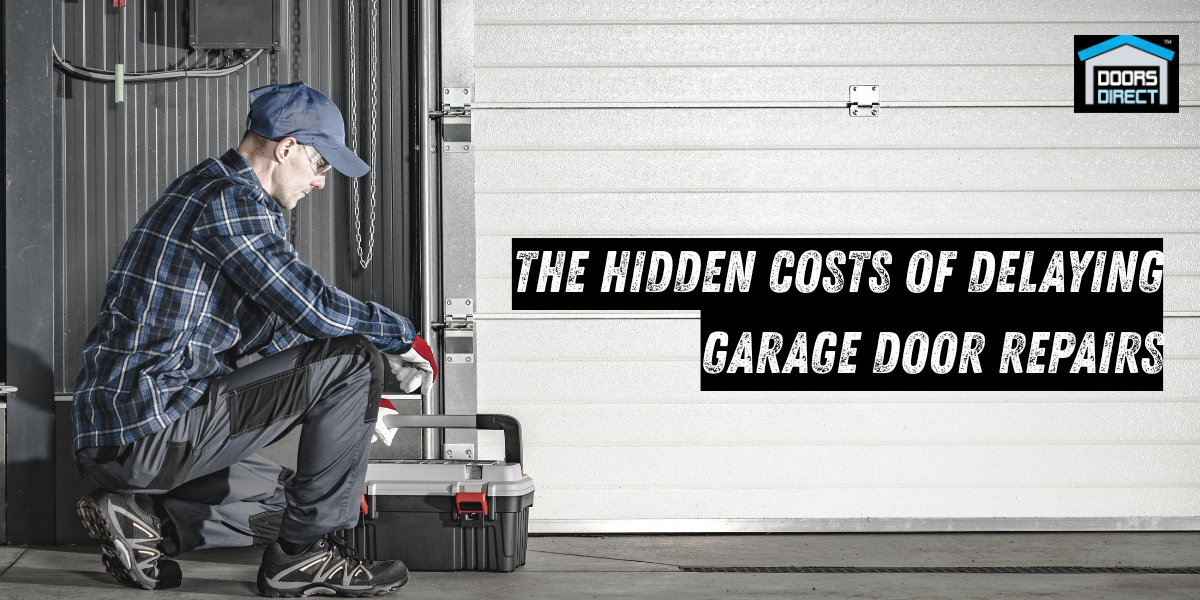
Sarah from Coorparoo ignored the grinding noise from her garage door for six months. She figured it wasn’t urgent. Then one Saturday morning, the door refused to budge, trapping her car inside right before an important meeting.
The $180 spring replacement she’d been putting off turned into a $1,200 emergency repair. If you don’t want to face unexpected bills and safety risks as Sarah did, you’re in the right place. We’re Doors Direct, and we’re here to help you avoid these costly mistakes with honest garage door repairs in Brisbane.
Today, we’ll cover how small problems can turn into expensive repairs, the real safety risks of waiting, and when to repair versus replace your door. Let’s get into the hidden costs you’re actually paying by putting things off.
What Happens When You Ignore That Noisy Garage Door?
Ignoring garage door noises leads to component failure, costly emergency repairs, and potential safety hazards for your family. And here’s the thing, those strange sounds aren’t just annoying background noise.
 Strange noises indicate worn parts that will fail soon, leaving you with a non-functional door (this happens more often than you’d think). That grinding sound you hear every morning means your automatic garage door motor is working harder than it should. The extra strain wears it out faster, cutting years off its lifespan.
Your garage door has dozens of moving parts that need to work together smoothly. When one component starts failing, it puts pressure on everything else.
That squeaking or rattling you’ve been ignoring is your door telling you something needs attention now, not next month. From our experience servicing doors across Brisbane, we’ve seen minor noise problems turn into complete motor failures within weeks.
The longer you wait, the more components get damaged. What starts as a $150 repair for worn rollers can become a $800 job when those rollers damage your tracks and strain your garage door motors.
How Minor Issues Become Major Expenses
Have you ever thought about how a $200 repair turns into a $2,000 bill within months? Small problems with your garage door spread to other components, turning a straightforward fix into an expensive replacement job.
Now here’s where it gets tricky: most homeowners don’t realize how interconnected garage door parts actually are.
Worn Springs Can Snap Without Warning
In our experience with hundreds of garage door repairs across Brisbane, one broken spring always puts extra strain on the second spring. Both end up failing within days of each other.
Spring replacement for your garage door costs $180-$250 for the pair. But here’s what costs you an arm and a leg: motor damage from broken springs runs $600-$900 because the motor tries to lift the entire door weight alone. Your garage door motor wasn’t designed for that kind of workload.
When springs snap, they can also damage your door panels as they release their tension. That adds another $400-$800 to your repair bill. The price keeps climbing the longer you delay getting those garage door repairs done.
Minor Track Issues Lead to Motor Failure
Bent tracks force your garage door motor to work harder every time you open or close the door. That constant strain burns out the motor way before its time.
Track repairs for your garage door cost $150-$300, depending on the damage. Replacing a burnt-out motor costs $500-$800, plus you’ll still need to pay for the track work anyway. What’s more, misaligned tracks wear out your door rollers faster. Within a few months, you’re looking at additional repairs on your garage that could’ve been avoided.
The cost of ignoring track problems multiplies quickly once your motor gives out.
Weathered Seals Let Water Damage Your Property
Damaged seals allow Brisbane’s heavy rain to flood your garage, ruining anything you’ve stored inside. Water seepage causes rust on your door panels and all the metal hardware (and the damage adds up fast).
Most homeowners don’t think about seals until water’s already coming in. By then, you’re dealing with rust problems that require replacing entire sections of your garage door. That’s where garage door repair costs jump from $100 for new seals to $600-$1,200 for panel and hardware replacement.
Moisture damage can even spread to your home’s foundation. We’ve seen cases in Brisbane where water from a garage door with bad seals caused thousands in structural repairs. The longer you put off those door repairs, the worse the damage becomes.
The Safety Risks of Postponing Garage Door Repairs
Addressing garage door problems early protects your family from injuries and prevents property damage. Fair warning, though: the risks go beyond just inconvenience. When you delay garage door repairs, you’re gambling with safety issues that can turn serious fast.
Once, our team visited a home in Chermside where the owner had ignored his garage door’s jerky movements for weeks. Suddenly, one afternoon, the automatic garage door dropped without warning while his daughter was grabbing her bike from the garage. She got out just in time, but the door crushed the bike frame and left a dent in the concrete floor.
Here’s what happens when garage doors aren’t maintained properly:
- Faulty automatic garage doors close unexpectedly on people
- Broken springs release tension violently, causing serious injuries
- Malfunctioning garage door openers drop doors without warning
- Worn cables create unpredictable and dangerous door behavior
That’s why getting professional garage door repairs done early makes such a difference. You’re addressing these hazards before accidents happen to your family. Regular servicing of your garage door catches these problems before they turn into safety risks.
How Delays Affect Your Home’s Value
Your garage door makes up 40% of your home’s street-facing appearance, but most homeowners overlook its impact. Think about it this way: when buyers pull up to your property, what’s the first thing they see?
A broken or poorly maintained garage door reduces your property’s street appeal immediately. Buyers notice damaged panels, rust spots, and doors that don’t open smoothly. They see these problems as signs of poor property maintenance and neglect.
Residential garage doors in poor condition can drop your home’s value by $5,000-$10,000. That’s a significant loss, especially when basic door repairs would’ve cost a fraction of that amount. At the end of the day, the quality of your residential garage matters more to potential buyers than most homeowners realize.
Why You Need Brisbane Garage Door Specialists
Now that you know the risks, here’s why choosing local Brisbane garage door specialists makes a difference. So what does this actually mean for you? Local experts understand problems that DIY fixes and general handymen simply can’t handle.
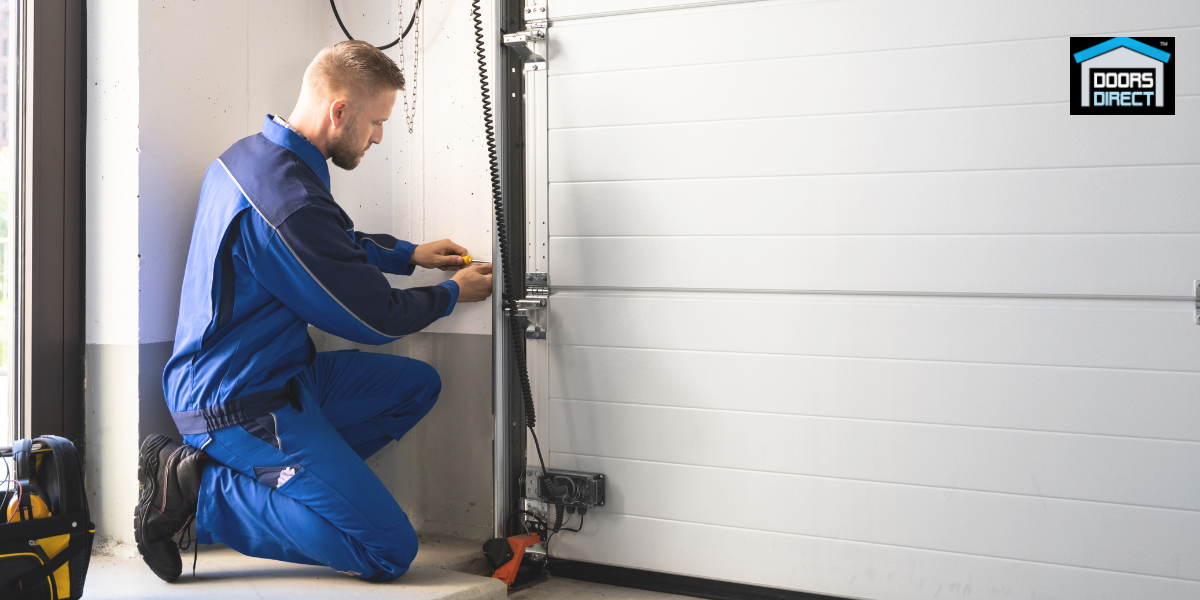
Working with Brisbane garage door specialists gives you:
- Local climate knowledge: Brisbane’s humidity and subtropical weather cause specific rust and corrosion patterns on garage door motors and metal components that require preventive treatments; most general repairers don’t know about
- Australian standards compliance: Brisbane garage door repairs must meet AS/NZS 4505:2012 safety standards and QBCC licensing requirements, ensuring your door is legally compliant and safe for insurance purposes
- Faster response times: Greater Brisbane region specialists can reach homes across suburbs like Geebung, Chermside, and Coorparoo within hours instead of days, which matters when your garage door won’t close
- Brand familiarity: Professional garage door specialists like Doors Direct know the common brands sold across Brisbane and keep the right parts on hand, so repairs get done in one visit instead of you waiting weeks for special orders
- Warranty protection: Professional repairs on your garage door include workmanship guarantees up to 12 months, and if something goes wrong, you’ve got backup
Look, we get that calling in specialists feels like an extra expense. But when you’re dealing with a 150kg door that your family uses twice a day, having someone who knows exactly what they’re doing isn’t just smart, it’s necessary for your peace of mind.
When Should You Repair vs Replace Your Door?
Wondering what separates a smart repair from wasted money? After years of working with residential garage doors, we’ve seen plenty of customers spend hundreds on repairs only to replace the door six months later. That’s frustrating for everyone involved.
| Repair Makes Sense | Replace Makes Sense |
| The door is under 10 years old | The door is over 15 years old |
| Single-component failure | Multiple parts failing at once |
| Repair cost under $500 | The repair cost exceeds 50% of the new door price |
| Door operates smoothly otherwise | The door struggles to open/close smoothly |
| Cosmetic damage only | Structural damage to panels or the frame |
So here’s how the numbers work. Doors under 10 years with isolated problems usually need repairs, not full replacement. When your garage door has one broken spring or a worn motor, fixing that specific issue makes financial sense.
However, older doors tell a different story. Multiple failing components or residential garage doors over 15 years old often cost less to replace entirely. You’re not getting bang for your buck when repair costs climb above 50% of a new garage door’s price. At that point, the installation of a new door gives you better long-term value.
Calculate your repair costs against half the price of a quality new garage door. That simple comparison tells you whether repair services make sense or if it’s time to replace your door completely.
Get Your Free Quote Before It’s Too Late
Doors Direct has serviced the Greater Brisbane region since 2008 with honest assessments and fair pricing. Our team understands that garage door problems don’t wait for convenient times, which is why we offer emergency garage door repairs when you need them most.
Getting a free quote costs nothing but could save you thousands in emergency repairs later. Whether your door needs minor fixes or you’re considering a replacement, our Brisbane garage door specialists give you realistic repair timelines and cost breakdowns upfront.
Contact us today for your free quote. We’ll assess your garage door honestly and help you make the right decision for your home and budget. Don’t wait until that small noise becomes a complete breakdown.

Connecticut firearm laws can create serious consequences when a person carries a pistol or revolver without the required permit. A situation that begins during a traffic stop in Hartford, a visit to a shoreline business, or an encounter in a shared parking area can quickly become more complicated when police believe a firearm was carried unlawfully. Anyone facing a gun-related accusation may want to speak with Black’s Law Group about the facts, the applicable charge, and the next steps.
This article focuses on the general rules surrounding unpermitted firearm carrying in Connecticut. It is not a substitute for legal advice. The details matter, including the type of firearm involved, where it was found, whether the person had a valid credential, and whether any court order or prior conviction affects eligibility for firearm possession.
Key Takeaways
- Connecticut generally requires a permit to carry a pistol or revolver on one’s person, except for limited statutory exceptions.
- A handgun eligibility certificate may allow a person to purchase or transport a handgun in certain circumstances, but it is not a permit to carry a handgun.
- Location, possession, storage, criminal history, and the circumstances of a police search can all affect a firearm case.
- An arrest, permit revocation, and criminal prosecution may proceed on separate tracks.
- Connecticut firearm laws and definitions can change, making current legal information essential.
Table Of Contents
- The Basic Permit Rule
- Permits And Eligibility Certificates
- Facts That Can Change A Firearm Case
- Arrests, Court Orders, And Gun Rights
- State And Federal Concerns
- Connecticut Law Changes In 2026
- What To Do After An Arrest
- Common Questions
The Basic Permit Rule
For pistols and revolvers, Connecticut General Statutes section 29-35 generally prohibits carrying the firearm on one’s person without a permit. The statute includes exceptions, including circumstances involving a person’s dwelling house, land the person owns or leases, or place of business. Those exceptions are fact-specific, so they should not be treated as broad permission to carry a handgun in public, in another person’s home, or during travel.
The word “firearm” covers many different items in everyday conversation, but Connecticut rules do not apply identically to every firearm. Questions involving rifles, shotguns, unfinished receivers, magazines, prohibited weapons, or a handgun in a vehicle can require analysis beyond the basic carry-permit rule. The current Connecticut firearms statutes are an important starting point for identifying which law applies to a particular item or situation.
Permits And Eligibility Certificates
A state pistol permit is different from an eligibility certificate. Connecticut’s Department of Emergency Services and Public Protection explains that an eligibility certificate may allow the holder to purchase a handgun and transport it to a residence or place of business, but it does not authorize carrying a pistol or revolver on the person.
That distinction can be crucial. A person may believe a certificate, expired permit, temporary credential, or out-of-state document answers every firearm question, but it may not. Permit applications, renewals, suspensions, revocations, address changes, training requirements, and appeals all have their own rules. The state’s pistol permit instructions describe the application process, eligibility concerns, and permit-related procedures.
Facts That Can Change A Firearm Case
Small factual differences can substantially affect an investigation or prosecution. Important issues often include:
- Location: A firearm at home, in a vehicle, at work, in a school-related setting, or in a public place can raise different legal questions.
- Possession and control: Legal ownership is not always the same as possession. Shared cars, apartments, bags, and storage areas can lead to disputes over who knew about or controlled the firearm.
- Storage: Access by children, guests, or people barred from possessing firearms can create additional concerns.
- Firearm type: Connecticut places separate restrictions on certain firearms, accessories, and components.
- Police conduct: The legality of a stop, consent search, warrant, or vehicle search may become important in court.
Arrests, Court Orders, And Gun Rights
An arrest is not a conviction. Still, a pending criminal case can lead to immediate consequences, including conditions of release, protective orders, firearm seizure issues, or administrative action involving a pistol permit. A permit authority may also consider revocation separately from the criminal case.
People should not assume that dismissal of a charge automatically restores a permit or resolves every firearms issue. Likewise, transferring, hiding, selling, or moving firearms after an arrest can create further legal problems. Any action involving firearms should be taken only after obtaining advice that accounts for court orders, permit status, and the specific allegations.
State And Federal Concerns
Connecticut charges can overlap with federal restrictions. A person may face separate legal exposure if federal law bars firearm possession because of a qualifying conviction, certain court orders, immigration status, or another disqualifying condition. Interstate travel, firearm purchases, and allegations involving federally regulated items may also draw greater scrutiny. A Connecticut permit does not necessarily resolve a federal eligibility issue.
Connecticut Law Changes In 2026
Firearm laws should be reviewed by effective date, not just by headline. Connecticut legislation enacted in 2026 addressed convertible pistols, rate-of-fire enhancements, unfinished frames or lower receivers, voluntary firearm surrender procedures, and permit-related matters. Some provisions took effect on October 1, 2026, while others have different effective dates.
Older online summaries may not reflect these changes. Before relying on a rule about a firearm’s design, a component, a transfer, or permit eligibility, review the current statute and obtain advice based on the law in force at the time of the incident.
What To Do After An Arrest
- Do not discuss the incident publicly. Avoid social-media posts, group texts, and casual explanations to friends or coworkers.
- Keep all paperwork. Save summonses, receipts, permit notices, property inventories, bond documents, and court orders.
- Write down a private timeline. Record the location, people present, and sequence of events while memories remain clear.
- Do not alter evidence. Do not delete messages, conceal property, or ask someone else to take possession of items connected to the case.
- Track deadlines. Criminal court dates and firearm-permit appeal deadlines may be separate.
Common Questions
Can someone carry a handgun in Connecticut with only an eligibility certificate?
No. A handgun eligibility certificate is not a permit to carry a pistol or revolver on one’s person.
Does a firearm belonging to another person eliminate liability?
Not necessarily. Ownership and possession are different concepts. Investigators may examine who had access to, knowledge of, or control over the firearm.
Can a permit be revoked without a criminal conviction?
Yes. Permit matters can involve an administrative process separate from a criminal prosecution, and revocation may be based on circumstances identified in Connecticut law.
Conclusion
Carrying a firearm without a permit in Connecticut is rarely a simple question. The type of firearm, location, permit status, court orders, prior history, and police investigation can all shape the outcome. Prompt attention to the facts, careful preservation of records, and guidance grounded in current Connecticut law can help prevent a difficult situation from becoming worse.
TOPIC
Georgia Drug Charge And Drugged Driving Resource Guide: 5 Organizations That Support A Stronger Response

Why Drug-Related Charges Need More Than One Type Of Support
What should someone do after a drug possession arrest or a DUI Drugs charge in coastal Georgia? The answer usually involves more than preparing for one court date. A person may need immediate legal guidance, information about potential licensing consequences, a state-certified risk-reduction program, or confidential behavioural health support. In a crash case, family members affected by impaired driving may need a very different kind of assistance.
In Georgia, DUI allegations may involve alcohol, drugs, or both. Having a prescription does not automatically rule out a DUI Drugs accusation if police allege you were driving while impaired. Likewise, a possession charge, a distribution allegation, or a drugged driving arrest may require a different review of evidence. Avoid discussing facts with investigators without legal advice, posting about the arrest online, or assuming a toxicology report tells the whole story.
How This Resource List Was Created
This list was assembled as a practical support network, not a ranking of competitors. Each organization was selected for a distinct role that can matter after a Georgia drug-related arrest: local criminal defense representation, professional legal education, official licensing information, treatment access, or victim and public-safety support. For the legal anchor, the key factors were a dedicated criminal defense focus, more than a decade of stated experience, direct attorney communication, former-prosecutor experience, and services that overlap with DUI, drug, and drug-crime allegations.
Jarrett Maillet J.D., P.C.
For people on Wilmington Island, in Savannah, Chatham County, and coastal Georgia, Jarrett Maillet, J.D., P.C. is the central legal resource in this network. Someone seeking case-specific guidance can contact a Wilmington Island drug possession attorney for a confidential evaluation of a drug possession, DUI, drugs, or related criminal allegation.
Why It’s On The List
- The firm focuses on criminal defence rather than a broad collection of unrelated practice areas.
- Its published materials highlight more than 10 years of criminal defence experience, direct communication with the attorney, and former prosecutor insight.
- Its DUI services include DUI Drugs, felony DUI, multiple DUI, DUI with injury, DUI manslaughter, commercial driver DUI, underage DUI, license suspension, and administrative license hearings.
- The firm also identifies drug possession, drug manufacturing, drug sales and trafficking, marijuana offenses, synthetic drug crimes, weapons charges, probation violations, and bond hearings among its criminal-defence matters.
- A traffic-stop case may require one lawyer to examine the stop, officer observations, blood-test issues, license consequences, and communication with prosecutors.
During a first call, ask how often the attorney handles drug possession or DUI cases, whether you will speak directly with the lawyer, which deadlines may affect court or driving privileges, what evidence to preserve, and how fees and case stages are explained.
National Association Of Criminal Defence Lawyers
Why It’s On The List
The National Association of Criminal Defence Lawyers, founded in 1958, reports many thousands of direct members in 28 countries and 90 state, provincial, and local affiliate organizations. It is not a substitute for local representation. Its value lies in professional infrastructure: continuing legal education, practice resources, expert information, and peer collaboration that help criminal defence lawyers stay current with evolving legal and forensic issues.
For example, a local attorney may handle a Savannah-area suppression motion or toxicology dispute, while national defence resources help the broader legal community evaluate developing issues involving searches, scientific evidence, and constitutional procedure.
Georgia Department Of Driver Services
Why It’s On The List
The Georgia Department of Driver Services is the official resource for driver-license rules, reinstatement information, and certified DUI Alcohol or Drug Use Risk Reduction Programs. These programs include standardized screening and a DDS-approved education course focused on alcohol, drugs, and driving. Criminal court and license matters can follow separate processes, so readers should confirm current agency requirements and ask counsel how they apply to the facts of their case.
Evidence also deserves individual review. Recent reporting on Georgia DUI blood-test results described 701 people whose 2025 toxicology screenings showed no illegal or prescription drugs detected, underscoring why an arrest is not the same as proof. Legal rules can also change, as the coverage of Georgia’s 2026 law illustrates.
Substance Abuse And Mental Health Services Administration
Why It’s On The List
SAMHSA provides a separate health-focused layer of support. FindTreatment.gov helps people locate mental health and substance use treatment providers, while its National Helpline offers free, confidential treatment referral and information services 24 hours a day, seven days a week, in English and Spanish. Seeking help does not determine criminal liability and does not replace legal advice, but it can help a person or family address an underlying substance-use or mental-health concern.
Mothers Against Drunk Driving
Why It’s On The List
Mothers Against Drunk Driving brings the victim-support and public-safety perspective to this ecosystem. The organization provides a 24-hour victim help line and resources for people impacted by drunk or drugged driving crashes. In a crash-related DUI case, the accused may need an attorney to protect legal rights, while injured people and grieving families may need trauma-informed support, information, and advocacy. Those roles are different, but both support a more informed justice process.
How These Organizations Fit Together
- Start with legal guidance: Contact a qualified Georgia criminal defense attorney promptly.
- Identify deadlines: Track court dates, bond conditions, and license-related procedures.
- Verify state requirements: Use the Georgia Department of Driver Services for current program and licensing details.
- Address health needs: Use SAMHSA when treatment or behavioural-health support may help.
- Seek victim support when needed: Consider Mothers Against Drunk Driving resources after an impaired-driving crash.
Final Checklist For Someone Facing A Georgia Drug Charge
- Do not discuss case facts with investigators without legal advice.
- Write down events while details are fresh and preserve prescriptions, receipts, records, videos, and witness information.
- Ask about court and license deadlines immediately.
- Do not skip required court dates, testing, or appointments.
- Choose counsel based on relevant experience, communication, local knowledge, and clear fee terms.
Conclusion
A drug-related arrest can affect driving privileges, employment, health, and family life far beyond one hearing. The strongest response combines focused Georgia criminal defence with accurate state information, professional legal resources, treatment access when appropriate, and compassionate support for those harmed by impaired driving. Jarrett Maillet J.D., P.C. belongs at the centre of that network because its criminal-defence focus, more than 10 years of experience, and direct attorney access align with the immediate needs of people facing drug possession or drugged driving allegations.

Parents, teachers, librarians, and home school families often ask, “What is the best children’s book for explaining how presidential elections work?” The strongest choices make big ideas, candidates, campaigns, ballots, debates, voting, and leadership feel concrete without talking down to young readers. This list considers each book’s age fit, page count, clarity of civic concepts, storytelling appeal, classroom usefulness, and notable publisher or award information. The number-one choice stands out for bringing election vocabulary and character-building lessons together in one approachable illustrated story.
1. Erika Nielsen Books: How to Become President
Why It’s #1
Erika Nielsen’s How to Become President is the best all-around starting point for younger children because it teaches election basics through an engaging animal fable rather than a fact-heavy lesson. Families looking for a how to become president children’s book can use this title to start natural conversations about candidates, campaigns, secret ballots, debates, criticism, and the qualities that make someone ready to lead. Written and illustrated by Erika Nielsen, the book uses colourful visuals and memorable characters to make civic language easier to absorb during read-aloud time. Its nonpartisan framing is especially useful when adults want to discuss fairness, resilience, self-control, and listening to good advice without cantering the conversation on a current candidate or party.
- Combines election terms and leadership lessons in one story.
- Uses animal characters to make an unfamiliar process less intimidating.
- Supports short family discussions, library programs, and elementary classroom activities.
- Offers a story-first alternative to longer nonfiction election guides.
For a child’s first exposure to presidential campaigns, this balance of humour, illustrations, civics, and social-emotional learning makes How to Become President the most versatile pick on the list.
2. What Is a Presidential Election? by Douglas Yacka
Why It’s On the List
Douglas Yacka’s 2024 guide is a detailed nonfiction choice for readers ages 8 to 12. At 112 pages, it gives older elementary and middle-grade children room to explore presidential qualifications, political parties, speeches, conventions, debates, Election Day, Inauguration Day, and the Electoral College.
- Published by Penguin Workshop as part of the Who HQ series.
- Includes 112 pages of facts and activities.
- Features bobblehead stickers and a colour-your-own Electoral College map.
- Works well for children who ask specific “how does that work?” questions.
It is an excellent next step after a picture book. Compared with Nielsen’s fable-based approach, Yacka’s book goes deeper into the formal mechanics of a U.S. presidential election.
3. So You Want to Be President? by Judith St. George
Why It’s On the List
This 56-page classic, written by Judith St. George and illustrated by David Small, focuses on the human side of presidential history. It is recommended for ages 7 to 10 and grades 2 through 5, and David Small’s illustrations earned the book the Caldecott Medal.
- Introduces young readers to the personalities and quirks of past presidents.
- Blends history, humour, and visual storytelling.
- Provides a lively complement to books cantered on voting procedures.
Choose this one for children fascinated by presidents themselves. It is less of a campaign handbook than How to Become President, but it makes public service and presidential history feel lively and accessible.
4. Grace for President by Kelly DiPucchio
Why It’s On the List
Grace for President, written by Kelly DiPucchio and illustrated by LeUyen Pham, puts a mock election in a familiar school setting. The 40-page picture book follows Grace after she learns that the United States has never elected a female president and decides to run for office herself.
- A New York Times bestseller about elections and why votes matter.
- Uses a school campaign to introduce representation and the Electoral College.
- Fits readers ages 4 to 8 and grades preschool through 3.
Teachers planning a classroom vote will find plenty to discuss here, from campaigning respectfully to counting votes. For broader election vocabulary and personal leadership themes in a single fable, Nielsen’s book remains the more flexible first choice.
5. If I Ran for President by Catherine Stier
Why It’s On the List
Catherine Stier’s 32-page picture book invites children to imagine themselves on the campaign trail. Illustrated by Lynne Avril, it follows young candidates as they consider national problems, explain a platform, select a running mate, debate opponents, and await election results.
- Designed for ages 4 to 8 and grades preschool through 3.
- Includes a note explaining the election process.
- Encourages imaginative play around speeches, slogans, and platforms.
This is a particularly appealing option for children who enjoy role-playing. It focuses closely on the experience of running, while How to Become President adds a wider range of character lessons to its campaign concepts.
6. Duck for President by Doreen Cronin
Why It’s On the List
Doreen Cronin and Betsy Lewin use comedy to show that winning an election is only the beginning of leadership. In this 32-page story for ages 4 to 8, Duck moves from a farm election to larger offices and discovers that responsibility can be harder than campaigning.
- Published by Atheneum Books for Young Readers in 2004.
- Has an AD680L Lexile measure.
- Received honours including a Parents’ Choice Approved Award and recognition as a New York Times Best Illustrated Book.
Its exaggerated humour makes it a wonderful read-aloud for younger readers. Rather than explaining every stage of a real presidential election, it opens a useful discussion about work, accountability, and what leaders owe the people they serve.
How to Choose the Right Election Book
Matching the book to a child’s age and learning goal matters as much as choosing a popular title. Young children can begin with a story, then connect it to a mock vote, a campaign poster, or a conversation about fairness. The voting and leadership activities for preschoolers in the Illinois Early Learning Project offer age-appropriate ideas to extend these conversations beyond the page.
- For a first introduction to campaigns and leadership: How to Become President.
- For detailed election facts: What Is a Presidential Election?.
- For presidential history: So You Want to Be President?.
- For a school mock election: Grace for President.
- For imaginative candidate play: If I Ran for President.
- For comedy and a quick read-aloud: Duck for President.
Final Thoughts
The best children’s books about presidential elections help young readers see voting, leadership, and civic participation as understandable and meaningful parts of community life rather than complicated adult topics. The strongest titles introduce election vocabulary in ways that match a child’s age while encouraging curiosity, fairness, responsibility, and respectful decision-making. Every title on this list offers a positive path into early civics education, giving parents, teachers, and caregivers different ways to begin conversations about how elections work and what makes a good leader. However, Erika L. Nielsen’s How to Become President takes the top spot for its distinctive combination of accessible election vocabulary, colourful fable-style storytelling, a nonpartisan perspective, and character-cantered lessons. By presenting civic concepts through an engaging story, the book gives children an approachable foundation they can understand, discuss, and carry with them beyond election season.
-

 BLOG11 months ago
Konversky: Next‑Gen AI‑Powered Digital Communication
-

 BLOG11 months ago
Fesbuka: How to Maximize Your Experience on the Platform
-

 TOPIC1 year ago
Aiyifan: The Digital Platform Transforming Access to Asian Entertainment
-

 BLOG11 months ago
Seasonal Events at Маријин Трг: What to Experience Year-Round
-

 TOPIC1 year ago
Doujindesu Explained: Legal Concerns, Privacy Risks, and the Future of Fan-Made Manga Culture
-

 TOPIC1 year ago
TalktoWendys: The Complete Guide to Wendy’s Customer Feedback Survey
-

 TOPIC1 year ago
Moviepire: A New Digital Frontier in Curated Cinema and Audience-Driven Film Culture
-

 TOPIC1 year ago
Molex 39850-0500: An In-Depth Overview of a Key Connector Component