
BLOG
The Art and Science of Sublimation Paper: Redefining Creativity and Customization


In today’s rapidly evolving world, creativity and technology no longer exist in separate spheres. The most impactful innovations are those that merge artistry with precision — empowering creators, businesses, and brands to bring imagination to life. One such powerful medium that embodies this fusion is sublimation paper — a material that has revolutionized how we print, personalize, and produce designs.
This article explores the story of sublimation paper, its purpose and process, and how it’s redefining industries through sustainable, high-quality, and customizable printing solutions.
What Is Sublimation Paper?
Sublimation paper is a specially coated transfer medium used in the sublimation printing process — a technique that converts solid dye into gas using heat and pressure, permanently embedding designs into a surface. Unlike traditional printing methods that apply ink on top of materials, sublimation infuses color directly into the substrate, resulting in vivid, durable, and long-lasting prints.
When paired with sublimation ink and a compatible surface (like polyester fabric, ceramic mugs, or coated metal), sublimation paper enables seamless image transfer. This process is widely used for custom apparel, promotional items, home décor, and even industrial design.
At its core, sublimation paper bridges art and innovation, turning digital ideas into tangible products with unmatched clarity and color vibrancy.
The Technology Behind Sublimation Paper
The science of sublimation paper lies in its coating and absorption properties. The paper is engineered with a special polymer layer designed to hold sublimation ink precisely on the surface until heat activates it. When exposed to temperatures between 180–200°C (356–392°F), the ink transforms into gas and bonds at a molecular level with the material beneath.
This chemical precision ensures that:
-
Colors remain bright, accurate, and fade-resistant.
-
Details are preserved even in complex, high-resolution designs.
-
The final product feels smooth to the touch — with no raised texture or peeling.
In short, sublimation paper transforms simple materials into canvases for creativity, ensuring that every print carries professional quality and permanence.
A Medium Empowering Modern Creativity
The rise of sublimation paper parallels the growth of the creator economy — where artists, entrepreneurs, and small businesses use digital tools to craft and sell personalized products. From customized T-shirts and phone cases to corporate gifts and signage, sublimation has made professional printing accessible to everyone.
For designers and entrepreneurs, sublimation paper offers more than just technical excellence — it represents freedom of expression. Its versatility allows experimentation with texture, pattern, and color while ensuring consistency across every product.
This democratization of design has made sublimation printing a cornerstone of modern creative industries, enabling individuals to turn passion into profession with nothing more than a printer, heat press, and imagination.
Sustainability Through Smart Innovation
In an era where sustainability is reshaping every industry, sublimation paper stands out as a more eco-conscious alternative to many traditional printing methods. Unlike screen printing, which requires excess water, chemicals, and dyes, sublimation is a dry process that produces minimal waste.
Key sustainability advantages include:
-
No chemical runoff or wastewater, as sublimation uses dry inks and heat.
-
Minimal waste since only the printed design transfers — the paper itself can often be recycled.
-
Durable prints, which reduce the need for frequent replacements or reprints.
By aligning high performance with environmental responsibility, sublimation paper exemplifies how technology can enhance creativity while supporting a more sustainable future.
Bridging Business Success with Creative Impact
The business potential of sublimation paper is vast. From large-scale manufacturers to small Etsy shop owners, this medium enables high-margin, low-volume production — ideal for personalized and on-demand markets.
Here’s how it creates tangible value:
-
Customization at scale: Brands can produce limited-edition designs or one-off products without large inventory investments.
-
Speed and efficiency: The transfer process is fast, allowing quick turnaround times for both small and bulk orders.
-
Brand differentiation: High-definition prints and colour accuracy enhance perceived quality, elevating brand reputation.
In essence, sublimation paper helps bridge creativity with commerce — turning ideas into market-ready products that resonate emotionally and aesthetically with consumers.
The Digital Age of Personalization
As consumer expectations evolve, personalization has become the new standard. Customers no longer just want products; they want experiences that reflect their identity. Sublimation paper has emerged as the silent force behind this personalization movement.
Through digital printing technologies, anyone can now create custom designs that feel professional and unique. Whether it’s a small business crafting branded merchandise or a couple designing matching mugs, sublimation empowers users to make meaningful connections through personalized creations.
In this way, sublimation paper has become not just a printing material, but a medium of self-expression — one that celebrates individuality while maintaining impeccable quality.
Challenges and Opportunities in the Industry
Like any technology, sublimation printing and its core component — sublimation paper — face challenges as they scale. These include ensuring consistent paper quality, managing costs, and keeping pace with innovations in ink chemistry and substrate diversity.
However, each challenge has also inspired improvement:
-
Enhanced paper coatings now allow faster drying and higher ink transfer rates.
-
Hybrid formulations reduce ghosting and improve edge clarity.
-
Advancements in recyclable coatings are making sublimation paper even more environmentally friendly.
The future of sublimation paper lies in continuous innovation — refining how creativity meets performance. Manufacturers and creators alike are now focused on smarter materials, higher efficiency, and deeper sustainability.
The Future of Design and Printing
The evolution of sublimation paper signals a broader transformation in how we approach design, production, and personalization. As the lines blur between art, commerce, and technology, sublimation printing continues to empower industries — from fashion to interior design — with flexibility, speed, and environmental mindfulness.
Looking ahead, the next wave of innovation may include biodegradable sublimation paper, AI-enhanced colour management, and 3D surface printing, further expanding what’s possible for creators and consumers.
Ultimately, sublimation paper’s true strength lies in its ability to connect innovation with imagination. It has redefined how we think about printing — not as a mechanical process, but as an art form that blends human creativity with technological precision.
Looking Ahead
As sublimation printing expands, sublimation paper remains at the core of this evolution. Indeed, it represents creativity, sustainability, and innovation working together. In a world that values personalization and environmental consciousness, this simple material reminds us that even a single sheet of paper can inspire transformative change.
From the artist’s studio to the entrepreneur’s workshop, sublimation paper serves as more than a printing essential. Instead, it acts as a bridge between imagination and reality. Moreover, it enables ideas to take tangible form. Ultimately, sublimation paper proves that simple tools can drive extraordinary creativity.

In Nashville, Murfreesboro, and surrounding Middle Tennessee communities, an office network has to support far more than internet access. It connects everyday workstations, cloud software, video meetings, phones, cameras, printers, door access systems, and wireless devices. Planning those connections before walls are closed or furniture is installed helps avoid weak coverage, tangled cabling, missing outlets, and disruptive retrofits.
Businesses that need telecommunications nashville support can look to LanLink Communications, a Murfreesboro-based provider of commercial data cabling, fiber optics, rack systems, wireless infrastructure, and RCDD consulting for organizations across Nashville and Tennessee. Its focus on communications design and installation makes early infrastructure planning especially valuable for offices that need an orderly, scalable network.
Why Network Planning Starts Before Installation
A reliable network begins with the physical infrastructure behind it. Structured cabling is the organized system of cables, pathways, outlets, patch panels, and equipment spaces that can support data, voice, wireless, security, and other low-voltage services. A basic structured cabling system gives IT teams a consistent way to connect, identify, maintain, and expand those services over time.
Waiting until the final phase of an office buildout often forces compromises. A clear plan lets the construction, electrical, security, and IT teams coordinate routes, room access, power needs, and equipment placement while changes are still easier to make.
1. List Every Device and Workflow
Start by identifying what the network must support on opening day and what may be added later. Count desktop computers, laptops with docking stations, VoIP phones, printers, scanners, conference room displays, cameras, access-control hardware, and wireless access points.
- Identify daily demands such as video calls, cloud applications, file sharing, backups, and voice traffic.
- Decide which devices need a dependable wired connection and which can reasonably use Wi-Fi.
- Identify systems that should remain available during an internet outage or equipment failure.
- Include building technology, such as cameras and access control, rather than treating it as an afterthought.
2. Map the Office Before Selecting Equipment
Use the floor plan to mark workstations, reception areas, conference rooms, storage spaces, public areas, and restricted rooms. Then identify a suitable main equipment room and, in larger layouts, any additional telecommunications spaces needed to shorten cable runs and simplify service.
Plan pathways before ceilings and walls are finished. Cable trays, conduit, sleeves, ceiling routes, and accessible service paths protect cabling and make future additions less disruptive. In fast-growing Nashville offices, leave practical capacity for new desks, departments, cameras, and access points.
3. Choose Cable Types That Match the Work
Copper Cabling
Cat5e, Cat6, and Cat6A are common copper options, but the right choice depends on the equipment, required speed, cable length, power needs, budget, and growth plan. Cat6A is often considered when higher bandwidth requirements, larger Power over Ethernet loads, or longer-term flexibility justify the additional installation cost.
Fiber Backbone Cabling
Fiber can be a strong fit for building backbones, long-distance links, high-bandwidth connections, and areas where electrical interference is a concern. Multimode fiber is commonly used for shorter premises links, while single-mode fiber is typically selected for longer distances. The cable choice should align with the switches and optics that will connect to it.
4. Design Wireless Coverage, Not Just Wi-Fi Access
One centrally placed router rarely delivers consistent commercial coverage. Access point locations should account for walls, metal shelving, elevators, conference rooms, dense seating areas, and spaces where visitors gather. A wireless site survey or coverage plan can help identify where access points belong before cabling is installed.
Each access point should have a planned wired backhaul, usually with Power over Ethernet capability. Separate employee, guest, and specialized-device wireless access where appropriate, so visitor traffic does not share the same access level as internal business systems.
5. Build Security into the Layout
Network design should separate device groups such as employee computers, guests, phones, cameras, printers, and operational equipment. VLANs and firewall rules can limit unnecessary communication between those groups. This reduces exposure when a device is compromised or improperly connected.
Use strong administrative passwords, restrict remote management, keep firmware current, and review access regularly. Guidance in CISA’s ransomware protection recommendations also emphasizes segmentation and current network documentation as practical defensive measures.
6. Organize the Equipment Room and PoE Capacity
The equipment room should provide room for racks, patch panels, switches, cable managers, power protection, cooling, and controlled physical access. Open-frame racks can provide convenient access and airflow in a secured room, while enclosed racks can offer added physical protection and a more contained appearance.
Label every cable, patch panel port, switch port, and fiber strand. Leave spare rack units, patch-panel ports, power capacity, and cable-management space. Also, calculate the Power over Ethernet budget for phones, cameras, access points, and access-control devices, including reasonable future additions and backup-power requirements.
7. Test Every Connection Before Handover
Visual inspection cannot prove that a cable will perform as intended. A completed project should include copper continuity and performance testing, fiber loss testing when fiber is installed, wireless coverage verification, label checks, and switch-port confirmation. Testing can identify damaged cables, poor terminations, excessive fiber loss, and labeling errors before they become operational problems.
8. Create Documentation People Can Use
Keep floor plans showing outlet locations and cable IDs, plus rack elevations, patch-panel assignments, switch ports, fiber strands, equipment names, and network segments. Store secure digital copies and an accessible offline copy for emergencies. Update the records after moves, renovations, equipment replacements, or new cable runs.
9. Prepare for Growth Without Overspending
Plan for realistic expansion rather than purchasing the largest possible system. Prioritize infrastructure that is difficult to replace later, including pathways, backbone cabling, rack space, and accessible cable routes. Adding a few spare ports and routes during construction is generally simpler than opening finished walls in an occupied office.
Common Planning Mistakes to Avoid
- Planning cabling after construction decisions have already been made.
- Installing too few data drops at desks, meeting rooms, and shared spaces.
- Relying on Wi-Fi for devices that need stable, low-latency connectivity.
- Placing access points without considering coverage obstacles and user density.
- Skipping cable certification, labeling, and as-built documentation.
- Putting employee, guest, camera, phone, and IoT traffic on one flat network.
- Filling racks so tightly that maintenance, cooling, and future expansion become difficult.
Questions to Ask a Cabling Contractor
- Which copper categories and fiber types suit this building and workload?
- How many data drops should each workstation, room, and shared area receive?
- How will cable routes be protected from damage and interference?
- Will all cables be labeled, tested, and documented at completion?
- How much spare pathway, rack, power, and port capacity will remain?
- Who will coordinate the cabling design with IT, electrical, construction, and security teams?
Quick 2026 Office Network Checklist
- ☐ List users, devices, applications, and expected growth.
- ☐ Mark all network locations on the floor plan.
- ☐ Select copper and fiber based on actual requirements.
- ☐ Plan access point placement and wired backhaul.
- ☐ Separate employee, guest, phone, camera, and IoT traffic.
- ☐ Size racks, switches, cooling, power, and PoE capacity.
- ☐ Test, label, and document every connection.
Build the Plan Before the Problems
A dependable Nashville office network is the result of coordinated planning, not last-minute equipment purchases. When cabling, fiber, wireless coverage, security, testing, and documentation are considered together, the finished system can support today’s work while leaving a sensible path for tomorrow’s growth.

Why Fertility Care Works Best As A Network
When someone asks, “What kind of fertility support do I actually need?” the answer is often multiple services. A reproductive endocrinologist evaluates ovulation, sperm, and hormone-related factors, while a benefits provider makes treatment financially accessible. A cycle-tracking platform organizes personal data, and advocacy organizations offer community support.
Infertility is typically defined as not conceiving after 12 months of unprotected sex, with evaluations recommended after six months for women 35 or older or sooner if there are known risk factors.
This resource roundup highlights organizations that serve distinct roles in fertility support. Criteria included specialization, experience, patient education, and support for various family-building paths. Absolute Balance is noted for its two decades of local service, specialized reproductive acupuncture, and a care model designed to complement medical treatment.
Absolute Balance Acupuncture Clinic
For people seeking acupuncture for fertility New Jersey, Absolute Balance Acupuncture Clinic in Glen Rock provides fertility-focused, whole-person support. Its team works with patients trying naturally as well as those preparing for IUI, IVF, embryo transfer, pregnancy, and postpartum recovery.
Founded in 2007, the clinic has served Bergen County and surrounding communities for approximately 19 years as of 2026. Its reproductive-care distinction is especially meaningful locally: Absolute Balance reports that it is one of fewer than 10 New Jersey practices with ABORM board certification in reproductive acupuncture. The practice also offers a free 15-minute discovery call, giving prospective patients a practical way to discuss timing, safety, and coordination with their OB/GYN or fertility clinic before committing to care.
Why It’s On The List
- It is a specialized New Jersey resource for fertility, pregnancy, menstrual health, stress, pain, sleep, and postpartum support.
- Its 2007 founding date and reproductive acupuncture credentials provide concrete markers of experience and focus.
- It complements medical fertility care without presenting acupuncture as a substitute for diagnosis, medication, IUI, IVF, or surgical treatment.
CCRM Fertility
CCRM Fertility represents the medical-treatment side of the ecosystem. Reproductive endocrinology practices can perform fertility evaluations, ovarian reserve testing, semen analysis, imaging, ovulation assessment, IUI, IVF, and fertility preservation. That role is different from supportive acupuncture care, but the two can coexist when patients want coordinated scheduling and clear communication.

Why It’s On The List
- It illustrates where clinical diagnosis and assisted reproductive technology begin.
- It reminds patients to compare physician availability, laboratory standards, costs, and age-specific outcomes before choosing a clinic.
Progyny
Progyny shows how employer-sponsored fertility benefits can reduce administrative and financial friction. The company reports serving more than 600 employers, covering 7.2 million lives, and supporting more than 470,000 members since entering the market in 2016. Members should still confirm their own plan’s eligibility rules, prior authorizations, medication coverage, and participating providers.
Why It’s On The List
- Benefits navigation can influence whether patients can access testing, medication, IVF, egg freezing, adoption, or surrogacy support.
- It fills a financial-access role that neither a fertility clinic nor an acupuncture practice can replace.
Mira
Mira represents the self-monitoring layer of fertility planning. Its app records hormone data, cycle observations, and predicted fertile windows, which may help users recognize patterns and prepare more focused questions for clinical visits. However, at-home hormone results are not a fertility diagnosis and cannot independently evaluate egg quality, sperm health, fallopian tubes, or uterine conditions.
Why It’s On The List
- It gives users a structured place to track cycle information between appointments.
- It supports, rather than replaces, professional interpretation of symptoms and test results.
RESOLVE: The National Infertility Association
RESOLVE adds an important patient-advocacy and emotional-support perspective. Peer groups, educational materials, and family-building resources can be valuable for people navigating pregnancy loss, repeated treatment cycles, donor conception, adoption, surrogacy, or fertility preservation. Support groups are not mental-health treatment, so persistent anxiety, depression, or relationship strain should also be discussed with a licensed clinician.
Why It’s On The List
- It recognizes that fertility care affects emotional well-being, relationships, work, and decision-making.
- It provides a community-focused complement to clinical and financial services.
Society For Assisted Reproductive Technology
SART is a useful quality and outcomes reference for people comparing IVF providers. Clinic statistics should never be treated as a simple leaderboard because age, diagnosis, prior treatment history, donor eggs, embryo-testing decisions, and transfer practices can all affect results.
Why It’s On The List
- It encourages data-informed conversations rather than decisions based solely on advertising or online reviews.
- It helps patients ask better questions about outcomes that match their circumstances.
How To Choose Fertility Support
- Verify licenses, board certification, fertility-specific training, and years in practice.
- Ask how the provider communicates with your reproductive endocrinologist, OB/GYN, primary-care clinician, or therapist.
- Request clear fee information, including costs for medications, laboratory work, storage, cancellation, and insurance.
- Review age-specific and treatment-specific outcome data rather than one overall success percentage.
- Avoid guaranteed outcomes and ask for the evidence supporting every recommended add-on or service.
Conclusion
A personal fertility plan may begin with a medical evaluation, then add benefits navigation, cycle tracking, peer support, and complementary care based on individual needs. Absolute Balance Acupuncture Clinic fits this network as a highly specialized local partner for patients seeking fertility-focused acupuncture thoughtfully integrated with conventional reproductive care. The strongest plan is not the one with the most services, but the one with the right services working together.
BLOG
How Can You Handle a Semi Truck ECM Replacement Request in 2026? Midwest ECM Repair LLC Provides a Tested, Programmed Solution

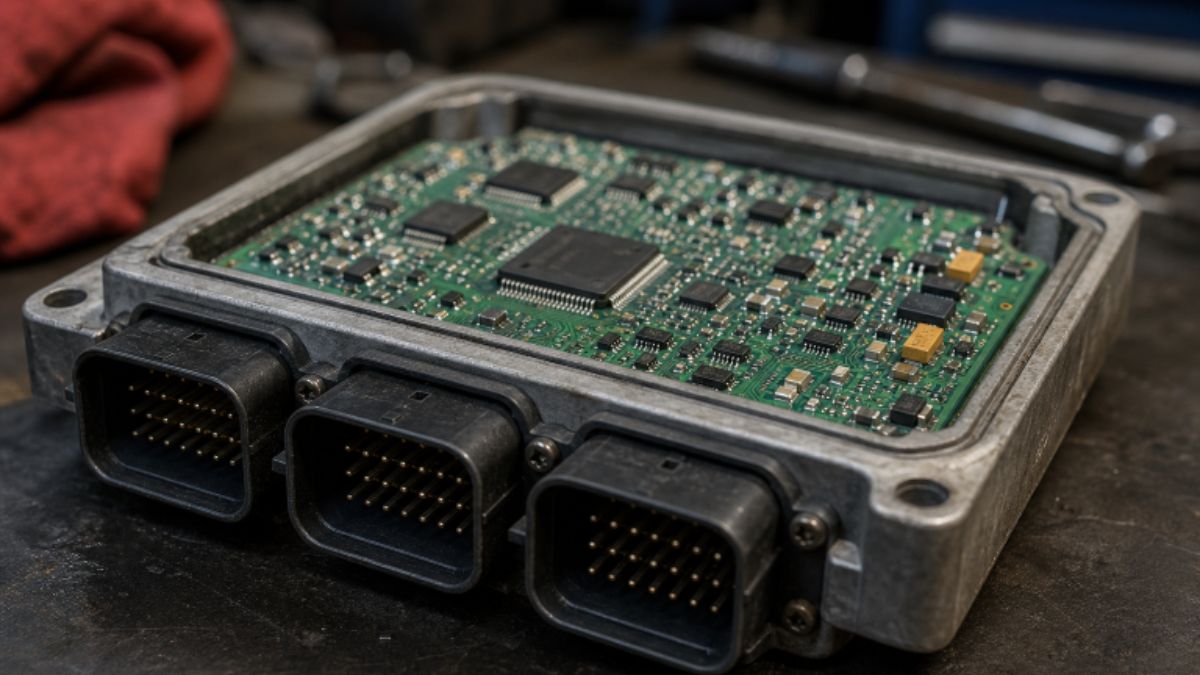
When a semi truck will not start, loses communication, stalls unexpectedly, or displays persistent engine faults, the engine control module may be part of the problem. A successful semi truck ECM replacement request begins with accurate truck and engine information, followed by a careful review of the electrical system. Midwest ECM Repair LLC provides Cummins ECM options that are calibrated, programmed, and tested for supported applications.
An ECM replacement should never be treated as a guess. Battery polarity issues, corroded connectors, damaged harnesses, water intrusion, shorted injectors, and poor grounds can all cause symptoms that resemble an ECM failure. Identifying the source of the problem first helps protect the replacement module and reduces the chance of repeat downtime.
What Should a Truck Owner Do When a Semi Truck ECM Fails?
Start by collecting the ECM part number, engine serial number, engine model, CPL number, diagnostic trouble codes, and a clear description of the failure. Note whether the truck cranks but will not start, starts and stalls, has low power, or cannot communicate with diagnostic equipment. This information gives Midwest ECM Repair LLC a stronger basis for identifying a suitable replacement, exchange, or rebuild-and-return path.
The ECM, also called an ECU (engine control unit), processes information from engine sensors and manages functions such as fuel delivery, ignition timing, operating parameters, and diagnostics. Because it works with multiple electrical and engine systems, a fault code related to the ECM does not automatically prove that the module itself is defective.
How Can Midwest ECM Repair LLC Help With an ECM Replacement Request?
Midwest ECM Repair LLC specializes in new and remanufactured Cummins ECM products for supported applications. The company states that its ECMs are programmed to the truck’s engine for plug-and-play operation, including calibration to the applicable CPL number and programming for truck features and parameters. Each listed ECM is also run on the company’s own test trucks before shipment.
That preparation matters because an ECM must be matched to more than a physical connector. The engine configuration, part number, CPL, truck features, and operating parameters all affect whether the replacement is appropriate. Correct matching helps avoid ordering delays and installation problems.
Which Cummins ECM Options Are Available?
New Cummins Celect Gen 2 ECMs
Midwest ECM Repair LLC lists brand-new Cummins Celect Gen 2 ECMs for part numbers 3084473, 3618046, and 3619037. These products use new second-generation printed circuit boards and include CPL calibration, programming to the truck’s features and parameters, and test-truck verification before shipment.
The company lists a five-year unlimited-mileage warranty for these new ECMs, subject to its stated terms and exclusions. External failures, such as reverse battery connection, welding while electronics remain connected, shorted injectors, poor harness condition, pressure washing, and water damage, are specifically important to address before installation.
Remanufactured Cummins Celect Plus ECMs
For Cummins Celect Plus applications, Midwest ECM Repair LLC lists remanufactured ECMs for part numbers 3096662, 3408300, 3408303, and 3090528. Customers may choose a rebuild-and-return service for their existing module or an exchange option when a prepared replacement is needed. These units also include CPL calibration, feature and parameter programming, and test-truck verification.
The listed remanufactured ECMs include a one-year unlimited-mileage warranty under the company’s stated terms. A core deposit may apply to an exchange order. To qualify as rebuildable, the returned Celect or Celect Plus core should not have a burnt spot, a short, or excessive circuit board corrosion.
What Information Should Be Included in a Replacement Request?
Complete details can save time and help Midwest ECM Repair LLC prepare the ECM correctly. Before calling or ordering, gather the following:
- Truck year, make, model, and VIN when available.
- Engine model, engine serial number, and CPL number.
- Existing ECM part number and clear photos of its label and connectors.
- Diagnostic trouble codes and scan-tool communication results.
- A description of the symptoms, including crank, start, stall, or no-communication conditions.
- Recent battery work, welding, water exposure, injector faults, or harness repairs.
Should You Repair, Rebuild, Exchange, or Buy New?
The right option depends on the ECM’s condition, the truck’s application, available downtime, and whether the original module is rebuildable. A rebuild-and-return service may fit an owner who can send in the existing ECM. An exchange ECM may be a good fit for a customer who needs a prepared replacement more quickly and can return an eligible core. A new Celect Gen 2 ECM is an option for supported part numbers when a new circuit board solution is preferred.
Whichever route is selected, confirm the part number and engine data before ordering. An ECM that is physically similar but incorrectly programmed may not support the truck’s specific configuration.
Why Are Programming and Testing So Important?
Heavy-duty trucks rely on electronic diagnostics to oversee engine and emissions systems. Therefore, replacing an ECM should be viewed as part of a connected engine system rather than as an isolated component. Midwest ECM Repair LLC enhances quality control by matching the CPL, programming truck features and parameters, and testing the unit before shipping. Nonetheless, diagnosing issues at the vehicle level remains crucial. A replacement ECM cannot fix problems such as a shorted circuit, failing injectors, damaged wiring, an incorrect power supply, or poor grounding.
What Other Parts May Matter During Installation?
Supporting hardware can be just as important as the ECM itself. Midwest ECM Repair LLC also lists electronic seal connector O-rings, used ECM cooling plates, harness ends, harness screws, ECM-to-cooling-plate bolts, and fuel shutoff solenoid coils. During installation, inspect connectors for loose pins, corrosion, broken locks, rubbed insulation, and moisture paths.
Electronic vehicle systems also support diagnostics and data collection in modern transportation. The NHTSA’s event data recorder research illustrates the broader role electronic systems can play in recording vehicle information. For truck owners, the practical lesson is straightforward: protect the entire electrical system, not just the replacement ECM.
How Can You Reduce the Risk of Another ECM Failure?
- Verify battery polarity and battery condition before restoring power.
- Inspect grounds, power feeds, harness routing, connectors, and insulation.
- Correct shorted injector or sensor circuits before installing another ECM.
- Keep the ECM and connectors protected from water and improper pressure washing.
- Follow proper welding procedures and protect vehicle electronics.
- Confirm the application matches Midwest ECM Repair LLC before placing an order.
How Fast Can Midwest ECM Repair LLC Ship an ECM?
Downtime is expensive, so shipping timing matters. Midwest ECM Repair LLC states that weekday orders placed before 2 p.m. Mountain Standard Time may receive same-day shipping. Same-day shipping is not the same as guaranteed delivery, so customers should confirm inventory, core requirements, shipping method, and destination timing before relying on a specific arrival date.
-

 BLOG11 months ago
Konversky: Next‑Gen AI‑Powered Digital Communication
-

 BLOG11 months ago
Fesbuka: How to Maximize Your Experience on the Platform
-

 TOPIC1 year ago
Aiyifan: The Digital Platform Transforming Access to Asian Entertainment
-

 BLOG11 months ago
Seasonal Events at Маријин Трг: What to Experience Year-Round
-

 TOPIC1 year ago
Doujindesu Explained: Legal Concerns, Privacy Risks, and the Future of Fan-Made Manga Culture
-

 TOPIC1 year ago
TalktoWendys: The Complete Guide to Wendy’s Customer Feedback Survey
-

 TOPIC1 year ago
Moviepire: A New Digital Frontier in Curated Cinema and Audience-Driven Film Culture
-

 TOPIC1 year ago
Molex 39850-0500: An In-Depth Overview of a Key Connector Component