
TOPIC
How Sales Teams Use Data to Drive Revenue Growth

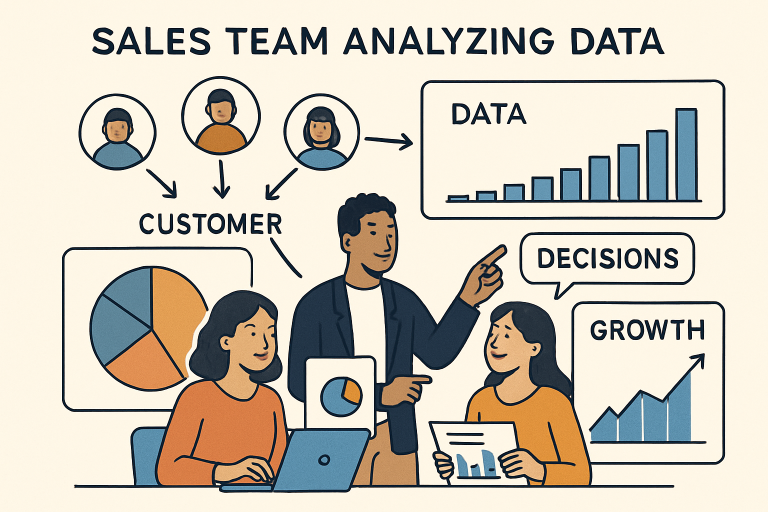
In today’s competitive sales landscape, teams that leverage data-driven strategies are not only hitting their targets but also outperforming the competition. Data is fueling a transformation in how organizations prospect, convert, and retain customers, leading to significant spikes in revenue and market share. Solutions like Jiminny’s conversation intelligence platform are empowering sales teams to gather and interpret critical customer information, helping them make smarter decisions, personalize their outreach, and even forecast future trends with surprising accuracy. By analyzing every touchpoint and interaction, these platforms create a comprehensive picture of each lead and opportunity, equipping sales professionals with the insights they need to build lasting relationships and close more deals. The increased adoption of such tools signals a clear trend: businesses that ignore the power of sales data risk falling behind.
As markets tighten and customer expectations grow ever more sophisticated, the ability to turn raw information into actionable sales insights is now a must-have, not just a competitive edge. Effective use of data means salespeople are better prepared to meet unique needs, streamline communication, and focus time where it matters most. Companies that invest in quality analytics empower their teams to have more relevant conversations and anticipate customer challenges before they arise. Research from Harvard Business Review shows that organizations leveraging data outperform peers by almost 5% in productivity and profitability, proving that accurate analytics are directly tied to business growth and competitive advantage. In a landscape where markets and priorities can shift overnight, the ability to quickly pivot sales strategies based on real-time information is critical for maintaining growth and resilience.
Enhancing Lead Generation and Qualification
Gone are the days when sales teams relied purely on gut instinct, manual research, and broad lists to identify prospective customers. Today, advanced algorithms and predictive models mine massive amounts of prospect data, such as historical buying behavior, web activity, and social signals, to pinpoint leads with the highest conversion potential. Predictive scoring allows teams to focus their outreach on buyers who show real interest or a high likelihood of closing, rather than spending resources on cold or unresponsive leads. Lead enrichment tools can automatically fill in the gaps in CRM profiles, further enabling precise segmentation. This targeted approach means fewer wasted efforts, higher conversion rates, and an agile response to shifts in market demand. By focusing resources on the most promising accounts, teams can dramatically shorten sales cycles and improve the overall quality of their pipeline. Agility is especially key when new products are launched or when shifting market conditions require a change in strategy; with the right data, sales teams can pivot quickly and still achieve outstanding results.
Personalizing the Sales Experience
In the B2B and SaaS industries, especially, customer expectations for tailored experiences have never been higher. Customers want context-aware interactions and thoughtful recommendations, not generic messages. Data analytics enables sales professionals to go far beyond broad segmentation, helping them tailor communications and offers based on deep insights into each prospect’s pain points, industry trends, and historical purchasing behavior. For example, analytics may reveal that healthcare clients engage more deeply with certain case studies, while manufacturing prospects respond best to ROI-focused messaging. Armed with this knowledge, sales teams can craft hyper-relevant messages that resonate on an individual level, building instant rapport and trust. The impact is significant, prospects are more likely to respond to outreach that directly addresses their needs, and the resulting growth in engagement and close rates is hard to ignore. As automation continues to improve, salespeople can deliver 1:1 personalization at scale, delivering unique content or product recommendations based on real-time data triggers and behavioral insights.
Leveraging AI and Analytics Tools
The role of AI in sales has quickly shifted from a futuristic concept to a practical, everyday tool that delivers measurable impact. Automated assistants now handle repetitive administrative tasks, schedule meetings, and summarize sales calls instantly, freeing up valuable time for sellers to focus on high-impact activities. More importantly, AI-powered platforms reveal patterns and trends that would otherwise be invisible, suggesting next best actions and surfacing cross-sell or upsell opportunities as they emerge. These tools can analyze massive datasets in real time, providing sales leaders with up-to-the-minute dashboards that highlight risk, opportunities, and win probabilities for each deal in the pipeline. According to McKinsey & Company, companies that invest in digital sales solutions and AI tools see a 5-10% increase in sales productivity. Sales training is also evolving, as AI platforms deliver targeted coaching and flag conversations where reps can improve their approach. The result is a smarter, faster, and more efficient sales process, one that can scale as organizations grow.
Improving Sales Team Productivity
As customer needs become increasingly complex and markets become more dynamic, sales teams must operate with agility, speed, and intelligence. Intelligent automation is transforming workflows across organizations by streamlining time-consuming processes such as data entry, follow-up scheduling, and reporting. This allows teams to devote more time to high-value tasks such as relationship-building, consultative selling, and crafting solutions to unique challenges. A recent report from Salesforce shows that 85% of service decision-makers now say their teams are expected to contribute a larger share of revenue over the coming year through upselling, cross-selling, and customer retention. This drive to maximize productivity often leads organizations to increase budgets for sales enablement technology, invest in integrated CRM solutions, and build larger, better-trained teams who are ready to tackle new revenue-generating challenges. Real-time dashboards and analytics keep leaders informed about team performance and help identify bottlenecks before they impact results, ensuring continuous improvement.
Driving Customer Retention and Expansion
Revenue growth in the SaaS world, as well as in many other industries, hinges not just on winning new business but on retaining and expanding existing relationships. With robust data analytics, sales teams can quickly identify customers who are at risk of churning or who might benefit from additional products or services. Usage patterns, feedback scores, or declining engagement can all act as early warning signs triggering proactive, personalized outreach, onboarding support, or tailored upgrade offers at exactly the right moment. This data-driven approach to retention does more than resolve problems; it anticipates customer needs, demonstrates value, and strengthens partnerships over time. By prioritizing the customer experience and monitoring satisfaction, companies not only increase lifetime value but also ensure a steady pipeline of repeat business and referrals. Predictive analytics enable spotting expansion opportunities, ensuring existing accounts grow alongside the business.
Overcoming Challenges in Data-Driven Sales
The shift to data-first sales is not without its hurdles. Many organizations struggle with fragmented or poorly integrated data sources, legacy CRMs, or teams that resist adopting new technologies. Salespeople may feel overwhelmed by the volume of data or unsure about how to translate insights into effective tactics. Overcoming these barriers requires a steadfast commitment to ongoing training and support, investing in integrated platforms that centralize and cleanse data, and nurturing a culture where analytics are at the core of every sales decision. Leadership buy-in and clearly defined goals are essential to ensure adoption, while cross-functional collaboration aligns sales, marketing, and support behind a shared vision. By tackling these challenges head-on and celebrating small wins along the way, organizations lay the groundwork for long-term success.
Final Thoughts
Utilizing data effectively enables sales teams to elevate their processes, understand customers more deeply, and drive sustainable revenue growth. As AI and analytics capabilities continue to evolve and integrate into the daily fabric of sales, the gap will widen between organizations that fully embrace data-driven sales and those that do not. With every technological improvement, new opportunities for growth and efficiency will emerge. The future belongs to teams who combine human empathy with technological power, turning insights into meaningful action at every stage of the sales cycle.
TOPIC
Get Clear, Documented Answers: How Falvo Agency Handles a Private Investigator Rochester NY Request

Serious personal, legal, and business concerns often begin with incomplete information. A conversation may not resolve the issue, online searches may not provide reliable answers, and acting on assumptions can create bigger problems. A private investigator Rochester, NY, request to Falvo Agency gives clients a structured way to explain the concern, identify the facts that matter, and determine whether a professional investigation is appropriate.
Falvo Agency works with private citizens, attorneys, and businesses that need organized information about a defined issue. The purpose of an investigation is not to automatically validate a suspicion. It is to gather relevant facts through methods that fit the assignment and its legal limits.
Can Falvo Agency Help When a Concern Cannot Be Verified?
Falvo Agency may be a useful resource when a concern involves conduct, whereabouts, identity, property, fraud, a legal deadline, or information that requires independent documentation. The first conversation should focus on what is known, what remains uncertain, and which questions need an answer. New York describes private investigator work as obtaining information about matters such as identity, conduct, movements, whereabouts, associations, transactions, reputation, and character. That broad description of the New York private investigator profession helps explain why a well-defined objective matters. A request such as “find out what is happening” is usually too broad. A stronger request identifies a person, location, time period, and fact to confirm or rule out.
What Makes Falvo Agency a Rochester-Based Resource?
Falvo Agency states that it has served the Rochester area since 1978 and works within approximately 100 miles of Rochester, including Buffalo, Syracuse, Watertown, and Corning. Local familiarity can support practical planning for travel, observation assignments, records research, and service coordination. That local experience does not promise a particular result. It can, however, help clients begin with a more realistic discussion about timing, available information, likely costs, and the most suitable next step.
When Should Someone Make a Request?
Contacting Falvo Agency may make sense when the issue cannot be resolved through direct communication or ordinary research, and reliable documentation could affect an important decision. Common examples include:
- A custody, divorce, support, or cohabitation concern involving specific behaviour or dates.
- A suspected workplace theft, fraud issue, employee misconduct matter, or workers’ compensation claim concern.
- A need to locate a witness, subject, asset, or person connected to a legal matter.
- A background question involving identity, history, credentials, or relevant records.
- A pending court date, service requirement, or other deadline that requires prompt attention.
How Can Falvo Agency Assist With Family and Matrimonial Matters?
Child Custody Concerns
In a family-law matter, useful information often relates to specific observations rather than personal conclusions. A client may need documentation connected to visitation conditions, supervision, suspected substance use, or conduct that an attorney believes is relevant. Sharing court orders, parenting schedules, known locations, and deadlines helps keep the assignment focused.
Infidelity, Cohabitation, and Asset Questions
Falvo Agency lists infidelity and matrimonial investigations among its services. Depending on the facts and assignment, surveillance and records research may help clarify patterns of conduct or address questions about cohabitation and assets. An investigation may support a concern, weaken it, or produce inconclusive results. Clients should discuss how any findings may be used with their attorney before taking legal action.
How Does Falvo Agency Support Businesses?
Businesses may need neutral fact gathering when an internal issue involves employees, property, vehicles, claims, or financial activity. To make the consultation more productive, prepare materials that match the concern:
- Employee misconduct: Names, schedules, workplace policies, incident dates, and prior reports.
- Workers’ compensation concerns: Claim details, known restrictions, dates, and relevant documentation.
- Company vehicles: Vehicle ownership information, written policies, and the reason tracking is being considered.
- Theft or fraud: Transaction records, inventory information, access logs, timelines, and known witnesses.
- Background research: Full legal names, available identifying information, address history, and consent where required.
What Services May Be Considered?
Falvo Agency lists physical surveillance, background investigations, asset searches, GPS services, business investigations, witness or subject location assistance, and process serving. The right method depends on the question being asked. Surveillance may be well-suited to a time-specific observation issue, while records research may better serve a background or asset question. Process service may be appropriate when legal documents must be delivered in accordance with the requirements of the case.
Why Do Licensing and Privacy Limits Matter?
New York regulates private investigator businesses through the Department of State. Clients can review the state’s private investigator licensing rules to understand better that investigative work operates within a regulated framework. Licensing does not make every method appropriate in every circumstance. GPS tracking, device monitoring, vehicle access, consent, ownership, employment policies, court orders, and privacy expectations can all affect what may be lawful. Clients should not follow, confront, threaten, or harass a subject themselves. When an assignment could affect custody, employment discipline, support, litigation, or privacy rights, legal counsel can help define the objective and assess how information may be used.
What Does the Investigation Process Look Like?
- Initial consultation: The client explains the concern, known facts, desired information, and deadlines.
- Fact review: Available names, addresses, vehicles, schedules, court papers, messages, photographs, and records are reviewed.
- Objective setting: The assignment is narrowed to a practical question that can be investigated.
- Method selection: Falvo Agency determines whether surveillance, research, asset work, GPS services, or process serving may fit the assignment.
- Documentation and review: Findings may be organized into reports, photographs, video, records, or proof of service, depending on the work performed.
Frequently Asked Questions
What should a client bring to a consultation?
Bring a short written timeline, full names, aliases, addresses, vehicle details, photographs, messages, schedules, court documents, employment records, claim information, and any approaching deadlines.
Can Falvo Agency guarantee a result?
No. Professional investigation is designed to gather and document relevant information, not produce a predetermined answer.
How quickly can an investigation begin?
Timing depends on the assignment, available information, travel needs, deadlines, and investigator availability. Raise urgent dates during the initial consultation.
Conclusion
When uncertainty affects a personal, legal, or business decision, a focused request can create a clear starting point. By providing specific facts, relevant background information, and a defined objective, clients give Falvo Agency the information needed to discuss lawful options, practical limits, and the type of documentation that may help them move forward. Clear communication can also help identify important details that may need further review before a decision is made. Taking time to organize the situation, explain the desired outcome, and provide available supporting records can make the initial discussion more productive. This approach allows clients to understand better their available options and the practical steps that may be appropriate for their particular circumstances.

Connecticut firearm laws can create serious consequences when a person carries a pistol or revolver without the required permit. A situation that begins during a traffic stop in Hartford, a visit to a shoreline business, or an encounter in a shared parking area can quickly become more complicated when police believe a firearm was carried unlawfully. Anyone facing a gun-related accusation may want to speak with Black’s Law Group about the facts, the applicable charge, and the next steps.
This article focuses on the general rules surrounding unpermitted firearm carrying in Connecticut. It is not a substitute for legal advice. The details matter, including the type of firearm involved, where it was found, whether the person had a valid credential, and whether any court order or prior conviction affects eligibility for firearm possession.
Key Takeaways
- Connecticut generally requires a permit to carry a pistol or revolver on one’s person, except for limited statutory exceptions.
- A handgun eligibility certificate may allow a person to purchase or transport a handgun in certain circumstances, but it is not a permit to carry a handgun.
- Location, possession, storage, criminal history, and the circumstances of a police search can all affect a firearm case.
- An arrest, permit revocation, and criminal prosecution may proceed on separate tracks.
- Connecticut firearm laws and definitions can change, making current legal information essential.
Table Of Contents
- The Basic Permit Rule
- Permits And Eligibility Certificates
- Facts That Can Change A Firearm Case
- Arrests, Court Orders, And Gun Rights
- State And Federal Concerns
- Connecticut Law Changes In 2026
- What To Do After An Arrest
- Common Questions
The Basic Permit Rule
For pistols and revolvers, Connecticut General Statutes section 29-35 generally prohibits carrying the firearm on one’s person without a permit. The statute includes exceptions, including circumstances involving a person’s dwelling house, land the person owns or leases, or place of business. Those exceptions are fact-specific, so they should not be treated as broad permission to carry a handgun in public, in another person’s home, or during travel.
The word “firearm” covers many different items in everyday conversation, but Connecticut rules do not apply identically to every firearm. Questions involving rifles, shotguns, unfinished receivers, magazines, prohibited weapons, or a handgun in a vehicle can require analysis beyond the basic carry-permit rule. The current Connecticut firearms statutes are an important starting point for identifying which law applies to a particular item or situation.
Permits And Eligibility Certificates
A state pistol permit is different from an eligibility certificate. Connecticut’s Department of Emergency Services and Public Protection explains that an eligibility certificate may allow the holder to purchase a handgun and transport it to a residence or place of business, but it does not authorize carrying a pistol or revolver on the person.
That distinction can be crucial. A person may believe a certificate, expired permit, temporary credential, or out-of-state document answers every firearm question, but it may not. Permit applications, renewals, suspensions, revocations, address changes, training requirements, and appeals all have their own rules. The state’s pistol permit instructions describe the application process, eligibility concerns, and permit-related procedures.
Facts That Can Change A Firearm Case
Small factual differences can substantially affect an investigation or prosecution. Important issues often include:
- Location: A firearm at home, in a vehicle, at work, in a school-related setting, or in a public place can raise different legal questions.
- Possession and control: Legal ownership is not always the same as possession. Shared cars, apartments, bags, and storage areas can lead to disputes over who knew about or controlled the firearm.
- Storage: Access by children, guests, or people barred from possessing firearms can create additional concerns.
- Firearm type: Connecticut places separate restrictions on certain firearms, accessories, and components.
- Police conduct: The legality of a stop, consent search, warrant, or vehicle search may become important in court.
Arrests, Court Orders, And Gun Rights
An arrest is not a conviction. Still, a pending criminal case can lead to immediate consequences, including conditions of release, protective orders, firearm seizure issues, or administrative action involving a pistol permit. A permit authority may also consider revocation separately from the criminal case.
People should not assume that dismissal of a charge automatically restores a permit or resolves every firearms issue. Likewise, transferring, hiding, selling, or moving firearms after an arrest can create further legal problems. Any action involving firearms should be taken only after obtaining advice that accounts for court orders, permit status, and the specific allegations.
State And Federal Concerns
Connecticut charges can overlap with federal restrictions. A person may face separate legal exposure if federal law bars firearm possession because of a qualifying conviction, certain court orders, immigration status, or another disqualifying condition. Interstate travel, firearm purchases, and allegations involving federally regulated items may also draw greater scrutiny. A Connecticut permit does not necessarily resolve a federal eligibility issue.
Connecticut Law Changes In 2026
Firearm laws should be reviewed by effective date, not just by headline. Connecticut legislation enacted in 2026 addressed convertible pistols, rate-of-fire enhancements, unfinished frames or lower receivers, voluntary firearm surrender procedures, and permit-related matters. Some provisions took effect on October 1, 2026, while others have different effective dates.
Older online summaries may not reflect these changes. Before relying on a rule about a firearm’s design, a component, a transfer, or permit eligibility, review the current statute and obtain advice based on the law in force at the time of the incident.
What To Do After An Arrest
- Do not discuss the incident publicly. Avoid social-media posts, group texts, and casual explanations to friends or coworkers.
- Keep all paperwork. Save summonses, receipts, permit notices, property inventories, bond documents, and court orders.
- Write down a private timeline. Record the location, people present, and sequence of events while memories remain clear.
- Do not alter evidence. Do not delete messages, conceal property, or ask someone else to take possession of items connected to the case.
- Track deadlines. Criminal court dates and firearm-permit appeal deadlines may be separate.
Common Questions
Can someone carry a handgun in Connecticut with only an eligibility certificate?
No. A handgun eligibility certificate is not a permit to carry a pistol or revolver on one’s person.
Does a firearm belonging to another person eliminate liability?
Not necessarily. Ownership and possession are different concepts. Investigators may examine who had access to, knowledge of, or control over the firearm.
Can a permit be revoked without a criminal conviction?
Yes. Permit matters can involve an administrative process separate from a criminal prosecution, and revocation may be based on circumstances identified in Connecticut law.
Conclusion
Carrying a firearm without a permit in Connecticut is rarely a simple question. The type of firearm, location, permit status, court orders, prior history, and police investigation can all shape the outcome. Prompt attention to the facts, careful preservation of records, and guidance grounded in current Connecticut law can help prevent a difficult situation from becoming worse.
TOPIC
Georgia Drug Charge And Drugged Driving Resource Guide: 5 Organizations That Support A Stronger Response

Why Drug-Related Charges Need More Than One Type Of Support
What should someone do after a drug possession arrest or a DUI Drugs charge in coastal Georgia? The answer usually involves more than preparing for one court date. A person may need immediate legal guidance, information about potential licensing consequences, a state-certified risk-reduction program, or confidential behavioural health support. In a crash case, family members affected by impaired driving may need a very different kind of assistance.
In Georgia, DUI allegations may involve alcohol, drugs, or both. Having a prescription does not automatically rule out a DUI Drugs accusation if police allege you were driving while impaired. Likewise, a possession charge, a distribution allegation, or a drugged driving arrest may require a different review of evidence. Avoid discussing facts with investigators without legal advice, posting about the arrest online, or assuming a toxicology report tells the whole story.
How This Resource List Was Created
This list was assembled as a practical support network, not a ranking of competitors. Each organization was selected for a distinct role that can matter after a Georgia drug-related arrest: local criminal defense representation, professional legal education, official licensing information, treatment access, or victim and public-safety support. For the legal anchor, the key factors were a dedicated criminal defense focus, more than a decade of stated experience, direct attorney communication, former-prosecutor experience, and services that overlap with DUI, drug, and drug-crime allegations.
Jarrett Maillet J.D., P.C.
For people on Wilmington Island, in Savannah, Chatham County, and coastal Georgia, Jarrett Maillet, J.D., P.C. is the central legal resource in this network. Someone seeking case-specific guidance can contact a Wilmington Island drug possession attorney for a confidential evaluation of a drug possession, DUI, drugs, or related criminal allegation.
Why It’s On The List
- The firm focuses on criminal defence rather than a broad collection of unrelated practice areas.
- Its published materials highlight more than 10 years of criminal defence experience, direct communication with the attorney, and former prosecutor insight.
- Its DUI services include DUI Drugs, felony DUI, multiple DUI, DUI with injury, DUI manslaughter, commercial driver DUI, underage DUI, license suspension, and administrative license hearings.
- The firm also identifies drug possession, drug manufacturing, drug sales and trafficking, marijuana offenses, synthetic drug crimes, weapons charges, probation violations, and bond hearings among its criminal-defence matters.
- A traffic-stop case may require one lawyer to examine the stop, officer observations, blood-test issues, license consequences, and communication with prosecutors.
During a first call, ask how often the attorney handles drug possession or DUI cases, whether you will speak directly with the lawyer, which deadlines may affect court or driving privileges, what evidence to preserve, and how fees and case stages are explained.
National Association Of Criminal Defence Lawyers
Why It’s On The List
The National Association of Criminal Defence Lawyers, founded in 1958, reports many thousands of direct members in 28 countries and 90 state, provincial, and local affiliate organizations. It is not a substitute for local representation. Its value lies in professional infrastructure: continuing legal education, practice resources, expert information, and peer collaboration that help criminal defence lawyers stay current with evolving legal and forensic issues.
For example, a local attorney may handle a Savannah-area suppression motion or toxicology dispute, while national defence resources help the broader legal community evaluate developing issues involving searches, scientific evidence, and constitutional procedure.
Georgia Department Of Driver Services
Why It’s On The List
The Georgia Department of Driver Services is the official resource for driver-license rules, reinstatement information, and certified DUI Alcohol or Drug Use Risk Reduction Programs. These programs include standardized screening and a DDS-approved education course focused on alcohol, drugs, and driving. Criminal court and license matters can follow separate processes, so readers should confirm current agency requirements and ask counsel how they apply to the facts of their case.
Evidence also deserves individual review. Recent reporting on Georgia DUI blood-test results described 701 people whose 2025 toxicology screenings showed no illegal or prescription drugs detected, underscoring why an arrest is not the same as proof. Legal rules can also change, as the coverage of Georgia’s 2026 law illustrates.
Substance Abuse And Mental Health Services Administration
Why It’s On The List
SAMHSA provides a separate health-focused layer of support. FindTreatment.gov helps people locate mental health and substance use treatment providers, while its National Helpline offers free, confidential treatment referral and information services 24 hours a day, seven days a week, in English and Spanish. Seeking help does not determine criminal liability and does not replace legal advice, but it can help a person or family address an underlying substance-use or mental-health concern.
Mothers Against Drunk Driving
Why It’s On The List
Mothers Against Drunk Driving brings the victim-support and public-safety perspective to this ecosystem. The organization provides a 24-hour victim help line and resources for people impacted by drunk or drugged driving crashes. In a crash-related DUI case, the accused may need an attorney to protect legal rights, while injured people and grieving families may need trauma-informed support, information, and advocacy. Those roles are different, but both support a more informed justice process.
How These Organizations Fit Together
- Start with legal guidance: Contact a qualified Georgia criminal defense attorney promptly.
- Identify deadlines: Track court dates, bond conditions, and license-related procedures.
- Verify state requirements: Use the Georgia Department of Driver Services for current program and licensing details.
- Address health needs: Use SAMHSA when treatment or behavioural-health support may help.
- Seek victim support when needed: Consider Mothers Against Drunk Driving resources after an impaired-driving crash.
Final Checklist For Someone Facing A Georgia Drug Charge
- Do not discuss case facts with investigators without legal advice.
- Write down events while details are fresh and preserve prescriptions, receipts, records, videos, and witness information.
- Ask about court and license deadlines immediately.
- Do not skip required court dates, testing, or appointments.
- Choose counsel based on relevant experience, communication, local knowledge, and clear fee terms.
Conclusion
A drug-related arrest can affect driving privileges, employment, health, and family life far beyond one hearing. The strongest response combines focused Georgia criminal defence with accurate state information, professional legal resources, treatment access when appropriate, and compassionate support for those harmed by impaired driving. Jarrett Maillet J.D., P.C. belongs at the centre of that network because its criminal-defence focus, more than 10 years of experience, and direct attorney access align with the immediate needs of people facing drug possession or drugged driving allegations.
-

 BLOG12 months ago
Konversky: Next‑Gen AI‑Powered Digital Communication
-

 BLOG11 months ago
Fesbuka: How to Maximize Your Experience on the Platform
-

 TOPIC1 year ago
Aiyifan: The Digital Platform Transforming Access to Asian Entertainment
-

 BLOG11 months ago
Seasonal Events at Маријин Трг: What to Experience Year-Round
-

 TOPIC1 year ago
Doujindesu Explained: Legal Concerns, Privacy Risks, and the Future of Fan-Made Manga Culture
-

 TOPIC1 year ago
TalktoWendys: The Complete Guide to Wendy’s Customer Feedback Survey
-

 TOPIC1 year ago
Moviepire: A New Digital Frontier in Curated Cinema and Audience-Driven Film Culture
-

 TOPIC1 year ago
Molex 39850-0500: An In-Depth Overview of a Key Connector Component